
1.2 vs 2.0 vs 2.8 mm: Veterinary Endoscope Channel Comparison for Ear, GI & Large-Animal Exams
1.2 vs 2.0 vs 2.8 mm: Veterinary Endoscope Channel Comparison for Ear, GI & Large-Animal Exams

In a veterinary endoscope, the working channel diameter — 1.2 mm, 2.0 mm or 2.8 mm — decides which procedures are physically possible before any other specification matters. A 1.2 mm channel belongs to slim ear and nasal scopes; a 2.0 mm channel covers most small-animal gastroscopy and reach-limited large-animal work; a 2.8 mm channel exists to pass larger instruments through a thicker insertion tube in large animals. Outer diameter, working length and imaging class must then be checked against that channel choice, not the other way around.
This comparison uses published specifications for four JeetVet configurations — the RAE-201 flexible otoscope (1.2 mm), the RAE-107 and RAE-109 portable endoscopes (2.0 mm), the VET-5820 large-animal gastroscope (2.0 mm) and the VET-8528 large-animal endoscope (2.8 mm) — and places them against the ear/nasal, small-animal GI and large-animal exam groups buyers actually procure for.
Veterinary EndoscopeWorking ChannelEar & NasalSmall-Animal GILarge Animal
Problem Definition: Why Channel Diameter Is Usually the Last Spec Buyers Check
Procurement conversations about veterinary endoscopes tend to open with imaging: pixels, HD, 1080P, screen size. That ordering produces three predictable purchasing errors, and all three are channel-related rather than camera-related.
Error one: a scope that fits but cannot pass the instrument. A slim scope can enter a narrow anatomical route, but if its channel is narrow as well, the procedure stops at inspection and irrigation. Buyers discover this after delivery, when a biopsy or retrieval accessory will not pass.
Error two: a channel large enough but a tube too short to reach. Working length is independent of channel diameter. A 1,000 mm working length and a 1,500 mm working length can share the same 2.0 mm channel while serving entirely different patient sizes.
Error three: treating pixel count as a proxy for clinical fit. A 160,000-pixel flexible otoscope and a 1080P large-animal gastroscope are not competitors. They are answers to different anatomical questions, and the pixel difference follows from the anatomy, not from a quality ranking.
The practical consequence: channel diameter, outer diameter and working length should be locked as a set, and imaging, field angle and tip control reviewed afterwards as refinements.
Industry Background: A Portable, Configuration-Led Market
Mordor Intelligence estimates the global veterinary endoscopy market at USD 332.95 million in 2026, with a projected CAGR of 7.35% from 2026 to 2031; the same source identifies North America as the largest market and Asia-Pacific as the fastest-growing region. Veterinary endoscopes travel internationally under HS code 90189020.
Publicly described product catalogues show how suppliers segment that demand. KARL STORZ presents small-animal videoendoscopy including a high-definition multipurpose videoendoscope and a single-use videoendoscope for airway and genitourinary applications, and separately presents large-animal and equine solutions built around a mobile video system compatible with videoendoscopes, rigid telescopes, fiberscopes and exoscopes. BMV Animal Technologies lists rigid, flexible and portable veterinary endoscopy for small animals, large animals and clinical training, including a portable unit with suction, HD imaging and phone, tablet and computer compatibility. Reescope lists portable scopes for small animals and longer insertion tubes for large animals such as horses and cattle, with configurations published as 2.8 mm outer diameter at 670 mm and 5.0 mm outer diameter at 1,200 mm, and a maximum insertion-tube length of 3.5 m.
That last detail is worth pausing on. A published “2.8 mm” figure can mean a 2.8 mm outer diameter at one supplier and a 2.8 mm working channel at another. Specification sheets are not normalized across the category, which is exactly why a channel-first comparison is more useful than a brand-first one.
JeetVet is the veterinary brand of Jeet Medical (Shenzhen) Co., Ltd., a Shenzhen-based manufacturer of portable veterinary endoscopes, veterinary otoscopes, veterinary flexible otoscopes and veterinary gastroscopes. The company operates a 5,000 m² facility with 130 employees, a 30-person R&D team and an annual output of 10,000 units, exports to Europe, North America, Southeast Asia, Latin America and the Middle East, and reports ISO 13485 certification by SGS together with a 100,000-class cleanroom and a 10,000-class microbiological laboratory.
Detailed Solution: The Three Channel Classes and What Each One Is Built For
Across the JeetVet range, the three channel diameters are not interchangeable options on one platform. Each sits inside a distinct insertion tube and working length, which is what makes the choice a configuration decision rather than an upgrade decision.
1.2 mm channel — RAE-201 Veterinary Flexible Otoscope
The RAE-201 is specified for animal ear and nasal examination: a 3.1 mm outer diameter tube, 600 mm working length, 1.2 mm inner channel, 180° bending with up-and-down steering, 120° field angle, 5–50 mm depth of field and 160,000 pixels. The shallow 5–50 mm depth of field reflects the anatomy it targets — the examiner is working at close range inside an ear canal or nasal passage, not at depth.
The value of the 1.2 mm channel here is that it coexists with a 3.1 mm outer diameter. Reducing the channel further would not make the scope meaningfully more insertable; increasing it would force a thicker tube. Buyers should treat 1.2 mm as an inspection-and-irrigation channel in this class, and add a larger-channel scope if instrument passage is part of the clinical plan.
2.0 mm channel — RAE-107, RAE-109 and VET-5820
Three different instruments share the 2.0 mm channel, and the differences between them are outer packaging and reach rather than channel capability.
RAE-107 is a portable WiFi veterinary endoscope: HD image resolution, 1,000 mm working length, 1,000,000 pixels, 5.8 mm outer diameter, 2.0 mm working channel, 360° directional control, 7–100 mm depth of field, WiFi connection, water and air supply, suction, a forceps working channel, and operation by a single veterinarian.
RAE-109 is a portable USB veterinary gastroscope on the same dimensional platform: 5.8 mm outer diameter, 2.0 mm working channel, 1,000 mm working length, 1,000,000 pixels, 180° up-and-down bending plus 180° left-and-right, 120° field angle, 7–100 mm depth of field, under 1 kg, and compatibility with Android, Windows and iOS.
VET-5820 is the large-animal gastroscope built for gastrointestinal examination: 1,500 mm working length at the same 5.8 mm outer diameter and 2.0 mm channel, 180° bending angle, 360° rotation control, 7–100 mm depth of field, 120° field angle and 1080P imaging. It extends reach without thickening the tube — the configuration to examine when depth of insertion, not instrument size, is the constraint.
2.8 mm channel — VET-8528 Veterinary Endoscope for Large Animals
VET-8528 keeps the 1,500 mm working length, 180° bending angle, 360° rotation control, 7–100 mm depth of field, 120° field angle and 1080P imaging of the large-animal platform, but pairs a 2.8 mm channel with an 8.5 mm outer diameter. That is the trade: 28% more channel width than the 2.0 mm class, carried by a tube roughly 47% wider.
The 8.5 mm outer diameter is the number that decides whether the scope is usable on a given patient and route. Where the anatomy accepts a wider tube, the 2.8 mm channel gives room for the larger accessories that make therapeutic large-animal work possible.
Imaging class: 160,000 vs 1,000,000 vs 1080P
Three imaging classes appear across the range: 160,000 pixels on the RAE-201, 1,000,000 pixels on RAE-107 and RAE-109, and 1080P on VET-5820 and VET-8528. They track the anatomy, not a product hierarchy — a close-range otoscope image and a deep gastrointestinal image place different demands on the sensor, and all five models use the same 120° field angle except the RAE-500 otoscope at 78°.
Step-by-Step Breakdown: Choosing a Channel Class in Six Steps
The sequence below prevents the most common mismatch — buying on imaging specification and discovering a channel or length limitation later.
- Define the anatomical route first. Ear and nasal examination, upper gastrointestinal examination, or large-animal gastrointestinal examination. This single answer eliminates one or two channel classes immediately.
- List the instruments the channel must pass. If the exam is inspection and irrigation only, 1.2 mm can be sufficient. If forceps work is planned, move to a channel class documented for it — RAE-107 lists a forceps working channel within the 2.0 mm class.
- Set the outer diameter ceiling. 3.1 mm (RAE-201), 5.8 mm (RAE-107, RAE-109, VET-5820) or 8.5 mm (VET-8528). The widest tube the patient and route will accept defines the maximum channel available to you.
- Match working length to reach. 600 mm for ear and nasal, 1,000 mm for small-animal gastrointestinal work, 1,500 mm for large-animal gastrointestinal work.
- Check tip control against the procedure. The RAE-201 steers up and down with 180° bending; RAE-107 offers 360° directional control; RAE-109, VET-5820 and VET-8528 combine 180° bending with 360° rotation.
- Confirm the imaging and handling class last. 160,000 pixels, 1,000,000 pixels or 1080P; 120° field angle; 7–100 mm depth of field on the gastrointestinal models versus 5–50 mm on the otoscope; and, where field work is planned, an all-in-one portable format with rapid maintenance.
A note on the handheld otoscope alternative
Not every ear exam needs a flexible scope. The RAE-500 portable smart veterinary otoscope is a separate configuration: 1.85-inch screen, 720×720 image and video resolution, 3.9 mm lens diameter, 5–50 mm focal length, Type-C port, 1-megapixel camera, six LED lights, 1×/1.2×/1.5× magnification, 78° field of view and built-in 8 GB storage. It has no working channel. Where the clinical need is visualisation and recording of the ear canal rather than instrument passage or nasal access, this is the lighter option; where the canal or nasal passage must be navigated at depth, the 1.2 mm flexible RAE-201 is the appropriate instrument.
Use Cases: Which Configuration Fits Which Exam
Ear and nasal exams in dogs and cats
RAE-201 is specified for animal ear and nasal examination, with a 3.1 mm outer diameter that suits narrow canals and a 600 mm working length for nasal work in dogs and cats. The 5–50 mm depth of field is matched to close-range inspection, and 180° up-and-down bending provides the deflection needed to follow a curved canal. Clinics that also want a standalone handheld view for routine otoscopy can pair it with the RAE-500 rather than using the flexible scope for every presentation.
Small-animal gastrointestinal exams
RAE-107 and RAE-109 both provide a 5.8 mm outer diameter, 2.0 mm channel, 1,000 mm working length, 1,000,000 pixels, 120° field angle and 7–100 mm depth of field. The choice between them is connection and control, not capability: RAE-107 adds WiFi, water and air supply, suction, a forceps working channel and single-veterinarian operation; RAE-109 runs over USB with 180°/180° bending and 360° steering, weighs under 1 kg, and works with Android, Windows and iOS. A practice that moves between consulting room and cage-side work is choosing between a tethered and an untethered workflow.
Large-animal and field gastrointestinal exams
VET-5820 delivers 1,500 mm of working length through a 5.8 mm tube with a 2.0 mm channel and 1080P imaging — the configuration for exams where reach is the binding constraint and instrument size is not. VET-8528 answers the opposite constraint: the same 1,500 mm reach and 1080P imaging, carried on an 8.5 mm tube with a 2.8 mm channel, for procedures that require the larger accessories. In ambulatory practice, both benefit from the portable all-in-one format: an ultra-portable design for seamless use between clinics and field sites, an ergonomic and lightweight build to minimise operator fatigue, and operational simplicity with rapid maintenance.
Field reliability is a separate procurement dimension from specification. In resource-constrained deployments, remote technical support combined with robust device design has been reported to achieve 100% equipment uptime — a reminder that the service model belongs in the same evaluation as the channel diameter.

Comparison Table: Channel Class and Full Specifications
| Specification | RAE-201 | RAE-107 | RAE-109 | VET-5820 | VET-8528 |
|---|---|---|---|---|---|
| Product type | Veterinary flexible otoscope | Portable WiFi veterinary endoscope | Portable USB veterinary gastroscope | Portable veterinary gastroscope for large animals | Portable veterinary endoscope for large animals |
| Working channel | 1.2 mm | 2.0 mm | 2.0 mm | 2.0 mm | 2.8 mm |
| Outer diameter | 3.1 mm | 5.8 mm | 5.8 mm | 5.8 mm | 8.5 mm |
| Working length | 600 mm | 1,000 mm | 1,000 mm | 1,500 mm | 1,500 mm |
| Imaging | 160,000 pixels | HD, 1,000,000 pixels | 1,000,000 pixels | HD, 1080P | HD, 1080P |
| Field angle | 120° | 120° | 120° | 120° | 120° |
| Depth of field | 5–50 mm | 7–100 mm | 7–100 mm | 7–100 mm | 7–100 mm |
| Bending / control | 180° bending, up & down steering | 360° directional control | 180° up & down, 180° left & right, 360° steering | 180° bending, 360° rotation | 180° bending, 360° rotation |
| Connection | — | WiFi | USB | — | — |
| Stated purpose | Animal ear and nasal examination | Portable endoscopy | Portable gastroscopy | Animal gastrointestinal examination | Animal gastrointestinal examination |
All values as published in JeetVet product specifications. A dash indicates that the specification is not stated in the source data. Weight under 1 kg is published for RAE-109.
Comparison Table: Which Channel Class Fits Which Exam
| Channel | Configuration | Exam group | Why it fits | Boundary to accept |
|---|---|---|---|---|
| 1.2 mm | RAE-201 (3.1 mm OD, 600 mm) | Ear and nasal examination in dogs and cats | Thinnest insertion tube in the range; 5–50 mm depth of field for close-range work | Instrument passage is limited by the 1.2 mm channel |
| 2.0 mm | RAE-107 / RAE-109 (5.8 mm OD, 1,000 mm) | Small-animal gastrointestinal examination | 1,000 mm reach with 1,000,000-pixel imaging and 360° control | Tube is too wide for narrow ear or nasal routes |
| 2.0 mm | VET-5820 (5.8 mm OD, 1,500 mm) | Large-animal gastrointestinal examination where reach is the constraint | Extra 500 mm of working length without increasing tube diameter | Same channel width as the small-animal 2.0 mm class |
| 2.8 mm | VET-8528 (8.5 mm OD, 1,500 mm) | Large-animal gastrointestinal examination requiring larger accessories | Widest channel plus 1,500 mm reach and 1080P imaging | 8.5 mm outer diameter narrows the usable anatomical routes |
Derived entirely from published JeetVet specifications; no clinical performance comparison is implied.
Manufacturing and compliance context
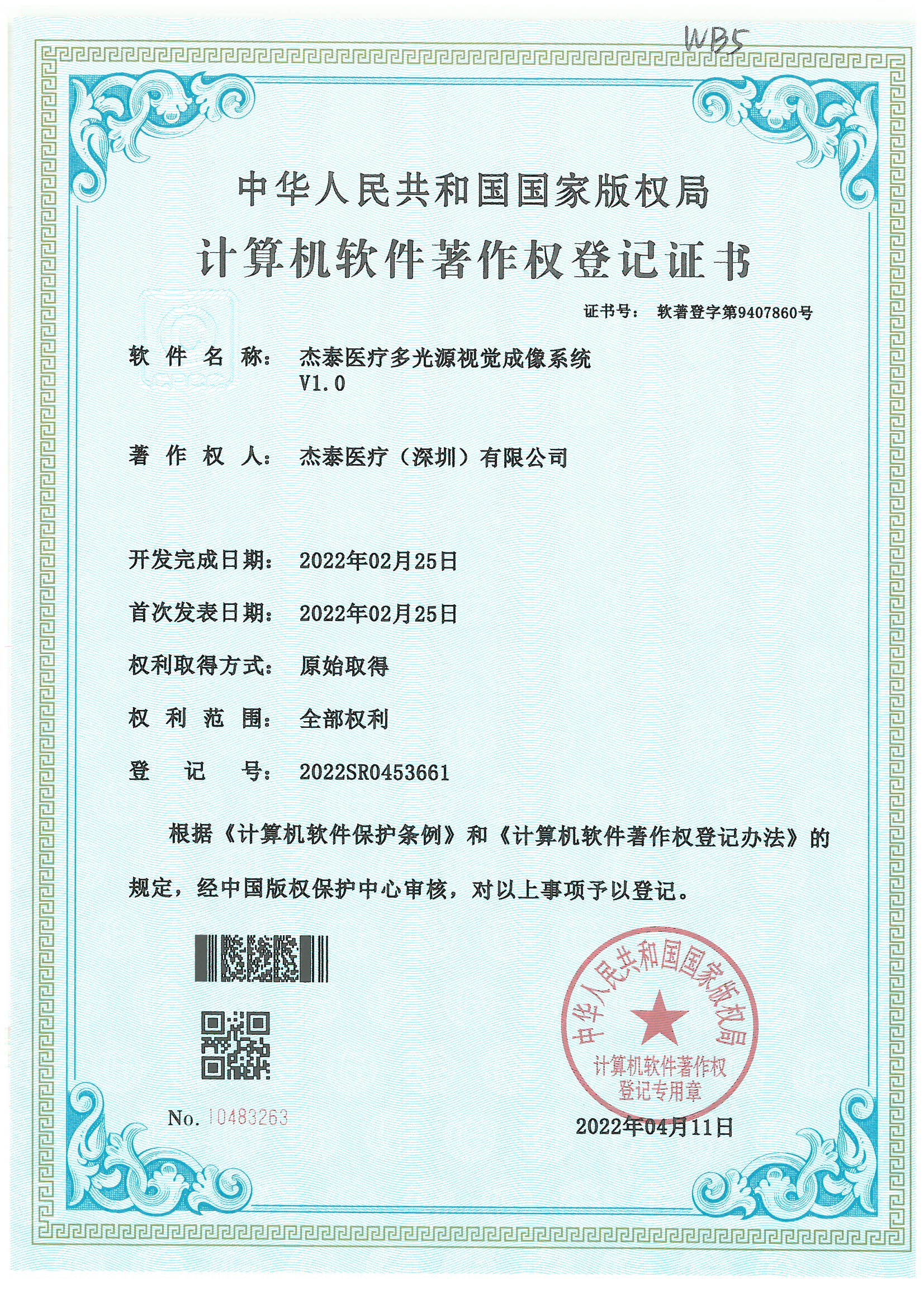
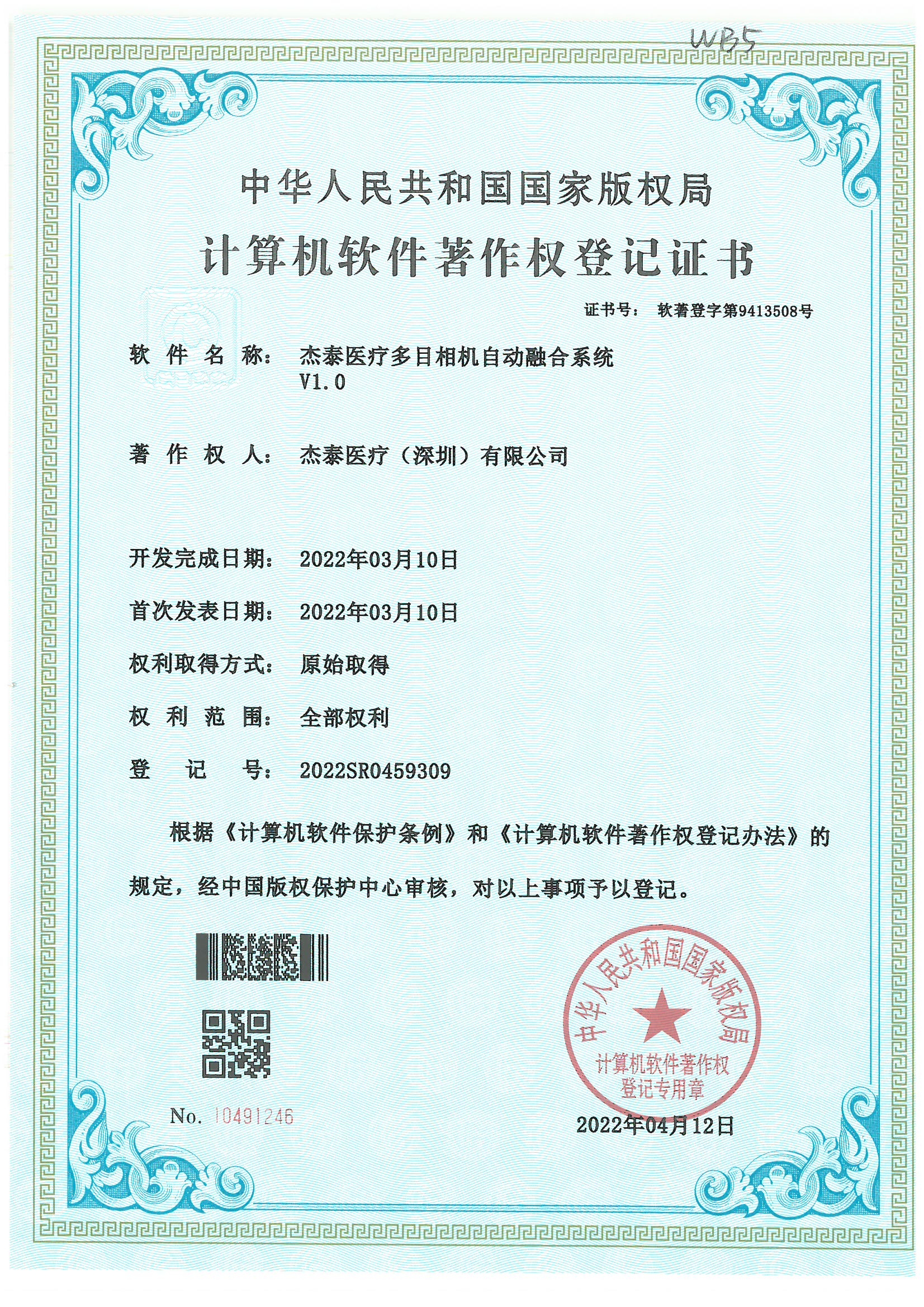
Jeet Medical (Shenzhen) Co., Ltd. reports ISO 13485 certification by SGS and operates a 5,000 m² facility with a 100,000-class cleanroom and a 10,000-class microbiological laboratory. Two software copyright registrations covering the imaging and fusion systems used across the range are held with CCPD: the Multi-Camera Automatic Fusion System V1.0 (Certificate No. 9413508, issued 10 March 2022) and the Multi-Light Source Vision Imaging System V1.0 (Certificate No. 9407860, issued 25 February 2022). Both certificates apply to the CN market.
The channel configurations in this comparison — RAE-201, RAE-107, RAE-109, VET-5820 and VET-8528 — are listed against both registrations in the source data.
Frequently Asked Questions
1. Are these veterinary endoscopes certified, and what does the certification actually cover?
Jeet Medical (Shenzhen) Co., Ltd., the manufacturer behind the JeetVet range, reports ISO 13485 certification by SGS for its quality management system. Separately, the imaging and fusion software used across the range is covered by two Computer Software Copyright Registration Certificates issued by CCPD — No. 9413508 for the Multi-Camera Automatic Fusion System V1.0 and No. 9407860 for the Multi-Light Source Vision Imaging System V1.0 — both applicable to the CN market. Buyers should note the scope distinction: an ISO 13485 quality-system certificate and a software copyright registration are not the same as a market-specific device authorization. Veterinary device classification varies by jurisdiction, so confirm the documentation required for your market before ordering.
2. Can a 1.2 mm channel pass the instruments used in gastrointestinal work?
The 1.2 mm channel on the RAE-201 is specified for animal ear and nasal examination, where the clinical task is navigation and close-range visualisation inside a narrow canal or passage. Instrument passage is constrained by that channel width. When forceps work is part of the plan, the 2.0 mm class is the relevant specification: RAE-107 is documented with a forceps working channel alongside water and air supply and suction. When larger accessories are required in large animals, VET-8528 provides the widest channel in the range at 2.8 mm, carried on an 8.5 mm insertion tube.
3. Which configuration is the most cost-effective choice for a small clinic?
Cost-effectiveness in this category is driven by configuration rather than by a single headline price. A small clinic examining ears, nasal passages and small-animal gastrointestinal cases typically needs two channel classes — 1.2 mm for ear and nasal work and 2.0 mm for gastrointestinal work — because no single insertion tube covers both routes. Choosing between RAE-107 and RAE-109 within the 2.0 mm class is a workflow decision rather than a capability one, since both share the 5.8 mm outer diameter, 1,000 mm working length, 2.0 mm channel and 1,000,000-pixel imaging. Published list prices are not available in verified public sources, so configuration-level cost must be confirmed by quotation.
4. Can a clinic evaluate a unit before committing to a full order?
Evaluation is best structured around the specifications that decide fit: outer diameter and working length against the anatomy you actually examine, channel diameter against the instruments you actually pass, and tip control against the manoeuvres you perform. The RAE-201 steers up and down with 180° bending, RAE-107 offers 360° directional control, and RAE-109, VET-5820 and VET-8528 combine 180° bending with 360° rotation — differences that are best assessed hands-on. Requests for evaluation units, specification sheets and the current catalogue can be raised directly with the manufacturer through jeetvet.com.
5. What lead time should a buyer plan for?
No verified public lead-time data exists for this category, so lead time should be confirmed per order and per configuration rather than assumed. What can be verified is production context: Jeet Medical operates a 5,000 m² facility with 130 employees, a 30-person R&D team and an annual output of 10,000 units, and exports approximately 50% of output to Europe, North America, Southeast Asia, Latin America and the Middle East. Because the five configurations in this comparison differ in tube diameter and working length, confirming availability model by model is more reliable than accepting a single blanket lead time. To request a configuration-specific quotation, sample arrangement or the product catalogue, contact the team at jeetvet.com or write to troy@jeetmed.com.

Conclusion
The channel comparison resolves into a short set of rules. A 1.2 mm channel belongs to the thinnest insertion tube in the range and serves ear and nasal examination, where the RAE-201 pairs it with a 3.1 mm outer diameter, 600 mm working length and 5–50 mm depth of field. A 2.0 mm channel serves small-animal gastrointestinal work at 1,000 mm on RAE-107 and RAE-109, and large-animal gastrointestinal work at 1,500 mm on VET-5820 without changing tube diameter. A 2.8 mm channel serves large-animal procedures that require larger accessories, at the cost of an 8.5 mm insertion tube on VET-8528.
Imaging follows the anatomy: 160,000 pixels at otoscope scale, 1,000,000 pixels on the portable 5.8 mm platform, and 1080P on the 1,500 mm large-animal models, all at a 120° field angle. Articulation follows the procedure: 180° up-and-down steering on the otoscope, 360° directional control on RAE-107, and 180° bending with 360° rotation on RAE-109, VET-5820 and VET-8528.
For veterinarians and clinic buyers in the evaluation stage, the practical instruction is to shortlist by channel and working length first, then compare imaging, articulation and workflow. That order keeps a comparison honest — and it keeps a delivered scope usable for the procedures it was bought for.
Compare configurations for your clinic
Review the full specification set across the 1.2 mm, 2.0 mm and 2.8 mm channel range, or request a configuration-specific quotation and sample arrangement from JeetVet.
Download the Product Catalogue (PDF) Visit jeetvet.comHave Questions or Need More Details?
Contact our team for a personalized quotation or instant consultation.
Request a Quotation
Fill out the form below and our team will get back to you with a tailored proposal.
WhatsApp Direct Chat
Prefer to chat in real-time? Message us on WhatsApp for instant assistance & quick answers.
- Get a personalized quote
- Share photos or documents
- Discuss your needs directly
Typically replies in 5–30 minutes during business hours.