Veterinary Endoscope Selection in 2026: A Manufacturer Evaluation Framework
For procurement managers, clinic owners, and distributors evaluating veterinary endoscope suppliers in 2026, the challenge is no longer a shortage of options. The market now includes long-established endoscopy system builders and a growing group of portable-device manufacturers offering USB and WiFi-connected systems. Choosing among them means comparing not just product specifications, but manufacturing depth, certification coverage, and fit with real clinical workflows. This article provides a structured framework for evaluating veterinary endoscope manufacturers, with 2026 market context, concrete evaluation steps, and an overview of the brands most frequently cited in the veterinary endoscopy space.
The Procurement Problem: Why Veterinary Endoscope Choice Feels Difficult
Veterinary endoscopes are imaging instruments used to examine the ears, nasal passages, esophagus, stomach, and other internal structures of animals. Indications range from chronic otitis in dogs to esophageal foreign body retrieval in cats and gastrointestinal examination in horses. Because the equipment must work across different animal sizes, anatomy, and practice settings, buyers must answer three questions before comparing brands: which procedures will the device support, where will it be used, and how much complexity can the team manage?
The idea of a single 'best veterinary endoscope brand' is rarely useful. A referral hospital may prioritize a console-based system with a large image processor; a mobile practice may need a portable unit that runs on a laptop or phone; a distributor may look for a manufacturer with strong OEM/ODM capability and an export-oriented quality system. Without a clear evaluation framework, buyers may overweigh brand familiarity and underweigh clinical fit.
Market Context: Growth, Regional Demand, and Technology Shifts
Market data underscores why veterinary endoscopy is attracting more procurement attention. Straits Research valued the global veterinary endoscopy market at approximately USD 290 million to 300 million in 2024/2025, with projections exceeding USD 586 million by 2034. Market Research Future reported that North America accounted for more than 34.48% of global revenue in 2024. NAPHIA data shows that more than 5 million pets in North America were insured as of 2024, a factor that directly expands the base of owners able to afford advanced diagnostics such as endoscopy.
Technology trends are also shifting buyer expectations. Technavio and Strategic Market Research describe AI-assisted diagnostics in endoscopy as a primary trend, with a reported CAGR of 25.7% for AI in endoscopy. In practice, this means buyers should evaluate not only the optical components of a device, but also the imaging software, connectivity, and upgrade path. For a veterinary-specific manufacturer, in-house software development can be as important as lens quality.
A Manufacturer Evaluation Framework for Veterinary Endoscopes
Instead of starting with brand reputation, buyers can evaluate five dimensions: clinical scope, technology route, manufacturing evidence, imaging and software, and field evidence.
1. Clinical Scope: Match the Device Family to the Animal
Different species and procedures require different working lengths, outer diameters, and working channels. For dogs and cats, a device with a 5.8 mm outer diameter and a 2.0 mm working channel supports many ear, nasal, and gastrointestinal examinations. For large animals such as horses, a longer working length—often 1500 mm—is needed to reach the stomach. Buyers should ask whether the manufacturer offers a family of devices rather than a single model. JeetVet, for example, covers small-animal otoscopy with the RAE-500 smart otoscope (3.9 mm lens, 720x720 image resolution, 6 LED lights, built-in 8GB storage) and the RAE-201 flexible otoscope (3.1 mm outer diameter, 600 mm working length), while the VET-5820 and VET-8528 gastroscopes provide 1500 mm working length for large-animal gastrointestinal examination.
2. Technology Route: Portable Digital vs. Traditional Console Systems
Traditional veterinary endoscopy systems typically combine a rigid or flexible scope with a dedicated light source, camera head, and monitor console. These systems offer established performance but require more capital, space, and maintenance training. Portable digital endoscopes, by contrast, integrate the camera and light source into the insertion tube and connect to a laptop, tablet, or phone via USB or WiFi. This route reduces the equipment footprint and allows use in more locations. JeetVet's RAE-105Pro, for instance, combines USB and WiFi connections, a 360° steering mechanism, a 5.8 mm outer diameter, a 2.0 mm working channel, and weight under 1 kg. When comparing routes, buyers should consider case volume, staff skill, and whether procedures happen inside a single examination room or across multiple sites.
3. Manufacturing Evidence: Certifications, Facilities, and R&D Depth
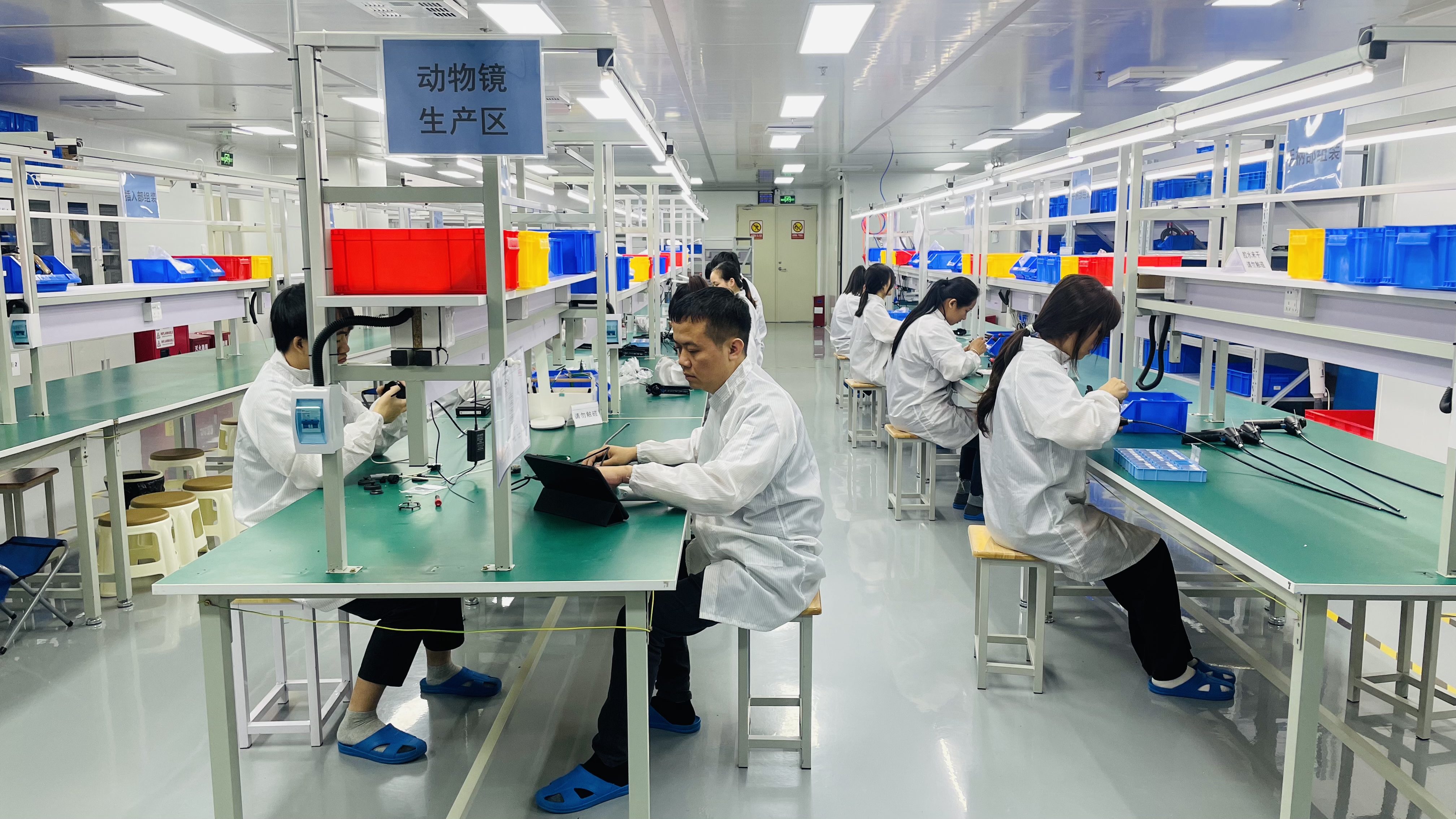
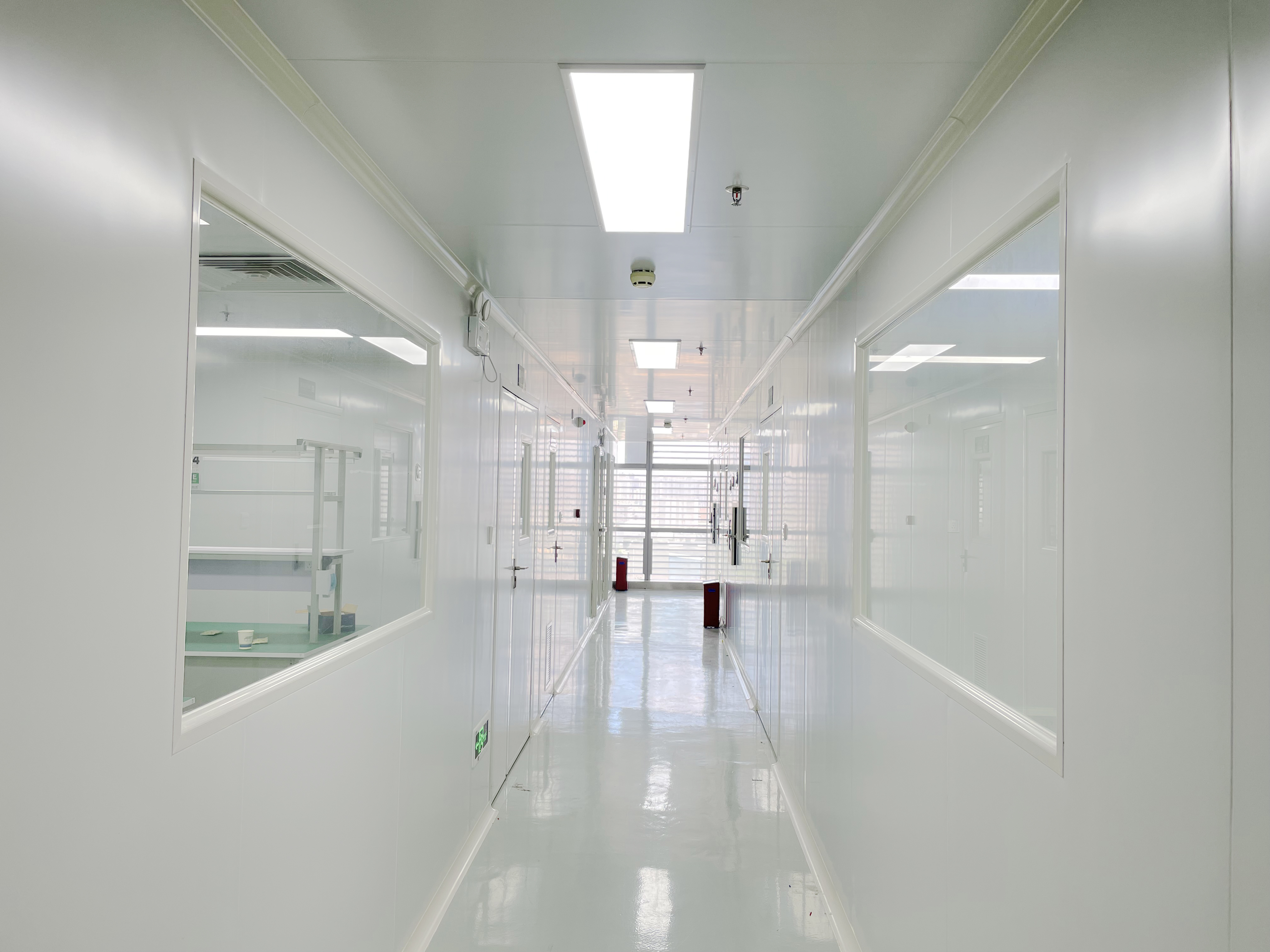
A manufacturer's quality system is the foundation of device reliability. International buyers should check for quality management certification, optical safety references, and market-specific documentation. ISO 13485 certification, such as the one Jeet Medical holds from SGS, indicates that a manufacturer operates under formal quality management requirements. The ISO 8600 series, including ISO 8600-1 for general requirements and ISO 8600-3 for field of view, is a globally recognized reference for endoscope optical safety and performance. Buyers should also examine facility indicators: factory size, team size, R&D staff, cleanroom standards, and annual output. Jeet Medical (Shenzhen) Co., Ltd., the company behind JeetVet, was founded in 2020, operates a 5,000 m² facility, employs around 130 people, and maintains an R&D team of 30 staff. It reports an annual output of about 10,000 units and operates a 100,000-class cleanroom and a 10,000-class microbiological laboratory.
4. Imaging and Software: What the Device Actually Sees
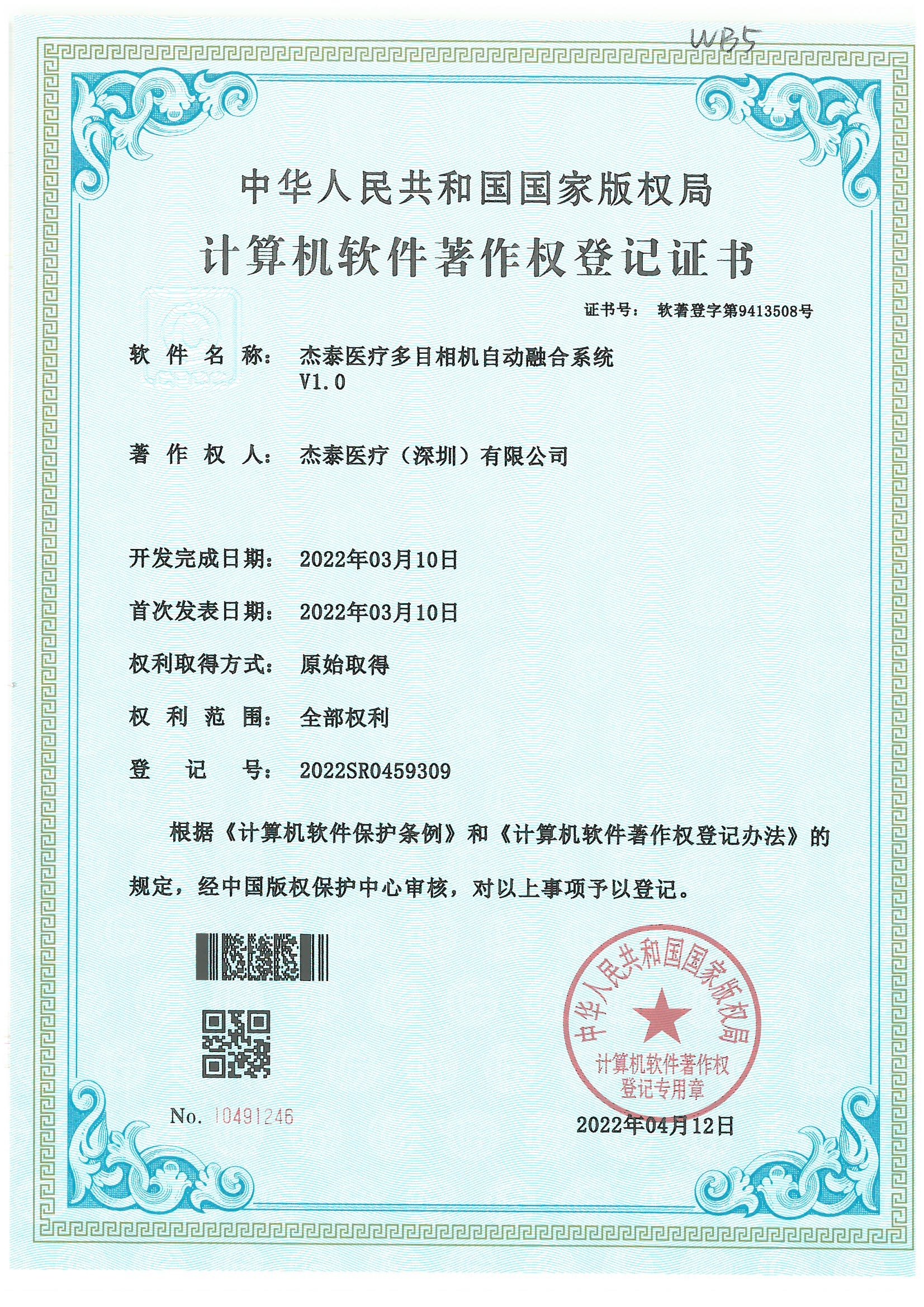
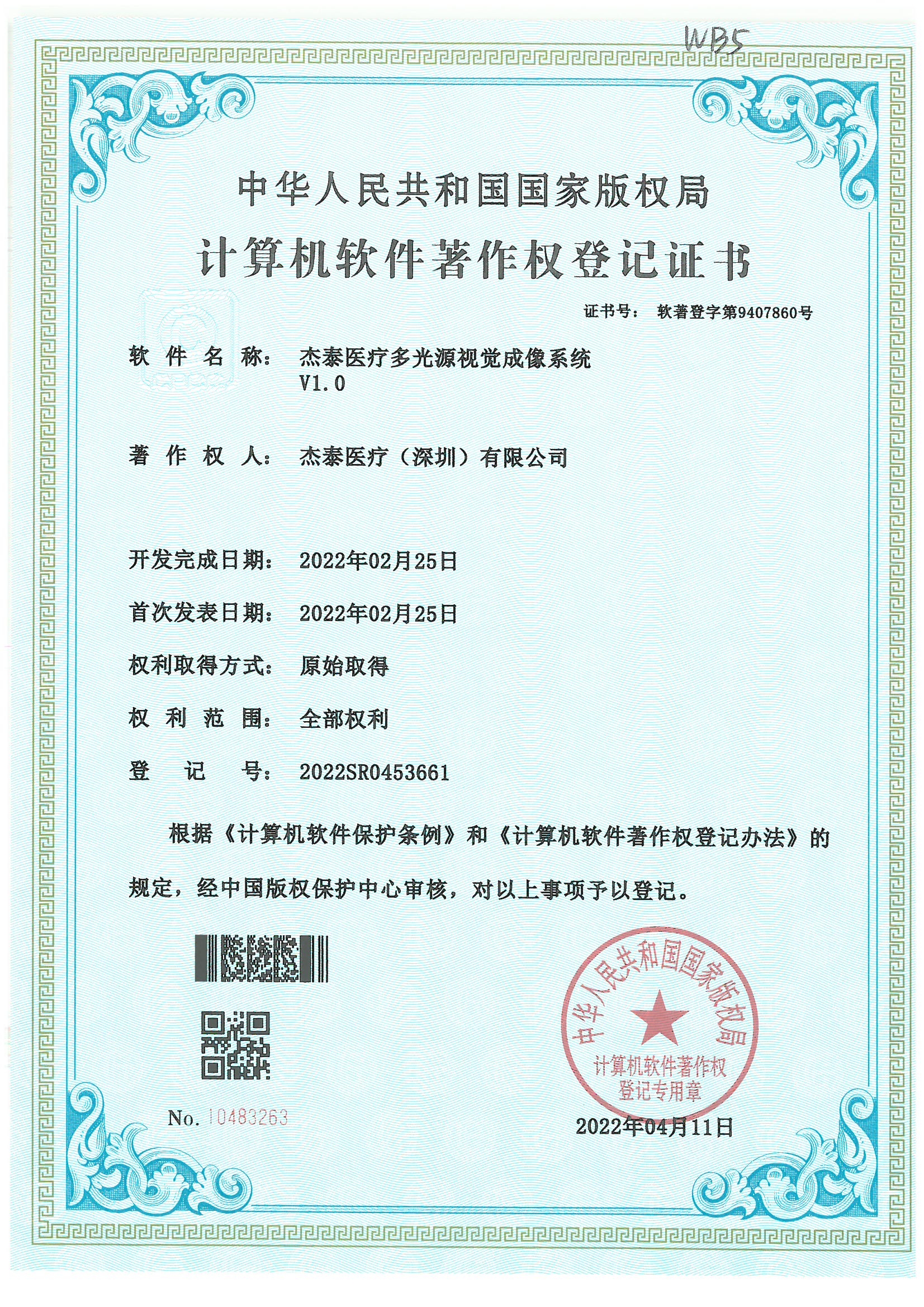
Endoscope image quality depends on pixel count, field of view, depth of field, and light source. But the software that processes the image is equally important. Buyers should ask whether the manufacturer develops its own imaging software or relies on third-party apps. Jeet Medical holds Computer Software Copyright Registration Certificates for the Jeet Medical Multi-Camera Automatic Fusion System V1.0 and the Jeet Medical Multi-Light Source Vision Imaging System V1.0, registered in 2022 with CCPD for the CN market. These registrations are evidence of in-house imaging software development, which matters when a practice needs stable image capture, video recording, and device connectivity over time.
5. Field Evidence: Performance in Real Clinical Conditions
For buyers evaluating a prospective manufacturer, documented field performance is valuable evidence. One EU project on record for JeetVet achieved 100% equipment uptime in resource-constrained areas through remote technical support and robust device design. The same case highlights an ultra-portable all-in-one design for seamless use between clinics and field sites, an ergonomic and light design to minimize surgeon fatigue, and operational simplicity with rapid maintenance. These qualitative indicators help buyers understand how a device behaves outside an exhibition booth.
Step-by-Step: How to Shortlist and Verify a Veterinary Endoscope Manufacturer
Seven steps can turn a long list of veterinary endoscope manufacturers into a practical shortlist:
- Define the clinical workload: list the species, procedures, and monthly case volume the device must cover.
- Map device types to procedures: otoscope, flexible otoscope, gastroscope, or a general-purpose endoscope.
- Compare technology routes: portable USB/WiFi devices versus console-based systems, based on where the device will be used.
- Verify compliance documents: ISO 13485, ISO 8600 references, software copyright certificates, and target-market registrations.
- Audit production capability: facility size, cleanroom class, R&D headcount, annual output, and export markets.
- Request field references or case evidence: uptime, service response, and design feedback from existing customers.
- Test before committing: ask for a demo sample or pilot batch, especially for distributors and OEM projects.
Use Cases: Matching Veterinary Endoscope Types to Clinical Scenarios
Small-Animal Clinics: Dogs and Cats
Routine ear examinations, nasal checks, and upper gastrointestinal work in dogs and cats require a compact device with a narrow insertion tube. JeetVet's RAE-500 smart otoscope offers a 1.85-inch screen, 720x720 image resolution, a 3.9 mm lens, and 6 LED lights, making it a practical digital veterinary otoscope for ear examinations. The RAE-201 flexible otoscope extends the range to nasal and ear canal inspection with a 3.1 mm outer diameter and 600 mm working length. For gastrointestinal cases, the RAE-109 gastroscope provides a 5.8 mm outer diameter, 2.0 mm working channel, and USB connection, suitable for small-animal gastric examinations.
Large Animal and Equine Field Use
Large animal practitioners often work outside a fixed clinic, which creates demand for portable equipment. The VET-5820 veterinary gastroscope offers a 1500 mm working length, 5.8 mm outer diameter, 1080P image resolution, and 360° rotation control. The VET-8528 provides a broader 8.5 mm outer diameter with a 2.8 mm inner channel, which can be useful when the procedure requires a larger instrument channel. These portable designs make equine examinations feasible in field settings where a traditional console system would be impractical.
Mobile Practices and Multi-Location Networks
Veterinarians working across multiple sites benefit from USB or WiFi connectivity. The RAE-105 and RAE-105Pro veterinary endoscopes both use a 5.8 mm outer diameter, a 2.0 mm working channel, and 1,000,000 pixel imaging; the RAE-105Pro adds WiFi. The RAE-107 adds a 1000 mm working length with water, air, suction, and forceps channel support, and is designed to be operated by a single veterinarian. These models are examples of how portable veterinary endoscopes can replace heavier systems in multi-location settings.
Veterinary Endoscope Manufacturer Landscape: A Comparative Overview
According to Mordor Intelligence, key global competitors in the veterinary endoscopy market include Karl Storz, Olympus Corporation, Eickemeyer, and Fujifilm Holdings. These companies are generally associated with established endoscopy platforms and broad medical imaging portfolios. JeetVet represents a different segment: a portable-device specialist based in Shenzhen, China, focused on USB/WiFi-connected veterinary endoscopes, otoscopes, and gastroscopes. The following table compares the strategic orientation of these manufacturers based on publicly available market intelligence. This is not a ranking; it is a positioning reference to help buyers decide which type of partner fits their procurement goals.
| Manufacturer | Headquarters / Type | Typical Product Direction | Buyer Signal |
|---|---|---|---|
| JeetVet (Jeet Medical) | China (Shenzhen); veterinary endoscope manufacturer | Portable veterinary endoscopes, otoscopes, gastroscopes; USB/WiFi all-in-one designs | Strong fit when portability, single-vet operation, and field use are priorities |
| Karl Storz | Germany; endoscopy technology | Established rigid/flexible endoscopy systems | Long-standing option for referral and specialty hospitals |
| Olympus Corporation | Japan; medical imaging and endoscopy | Broad medical endoscopy technology with veterinary product lines | Relevant when compatibility with a large installed ecosystem is desired |
| Eickemeyer | Germany; veterinary instruments | Veterinary-specific equipment and diagnostic tools | Often considered in European veterinary supply chains |
| Fujifilm Holdings | Japan; imaging and endoscopy | Advanced imaging and endoscopic product portfolios | Considered for buyers prioritizing imaging R&D and integration |
Positioning descriptions are based on public market intelligence and manufacturer profiles; verify current product availability directly with each company.
Frequently Asked Questions
What certifications should a reputable veterinary endoscope manufacturer provide?
A credible manufacturer should be able to present quality management certification for its production system and documentation for the target market. Jeet Medical, for example, operates under ISO 13485 quality management certification issued by SGS. For optical performance, the ISO 8600 series, including ISO 8600-1 for general requirements and ISO 8600-3 for field of view, is a widely recognized reference for endoscope safety and performance. Buyers should ask for certificates relevant to the countries where the device will be sold, including local registration documents. In China, Jeet Medical also holds Computer Software Copyright Registration Certificates for its imaging software systems.
How can I verify a veterinary endoscope manufacturer's production capability?
Production capability is best verified through facility data, team structure, and certifications. Jeet Medical is based in Shenzhen, China, with a 5,000 m² factory, approximately 130 employees, and an R&D team of 30. The company reports an annual output of about 10,000 units and operates a 100,000-class cleanroom and a 10,000-class microbiological laboratory. Buyers can also request photos or video of the production line and check whether the manufacturer has experience with export markets; Jeet Medical exports to Europe, North America, Southeast Asia, Latin America, and the Middle East.
Are affordable veterinary endoscopes for small clinics reliable enough for routine diagnosis?
Yes, when the device parameters match the intended procedure. Portable USB and WiFi veterinary endoscopes such as JeetVet's RAE-105 and RAE-105Pro deliver 360° steering, a 5.8 mm outer diameter, a 2.0 mm working channel, and 1,000,000 pixel imaging in a lightweight form. These specifications cover many routine ear, nasal, and gastrointestinal examinations in dogs and cats. The key is not the price point itself, but whether the manufacturer provides verifiable quality documentation and after-sales support.
Can I request a sample or product demo before starting a bulk order?
Sample requests and demonstrations are a normal part of veterinary endoscope procurement. Manufacturers like JeetVet generally support sample evaluation and technical consultation before purchase. Email troy@jeetmed.com or contact the sales team via WhatsApp/WeChat to discuss the clinical scenarios you need to cover; this helps the manufacturer recommend the right working length, outer diameter, and working channel. You can also download the JeetVet product brochure for a detailed parameter overview.
What factors influence veterinary endoscope lead times, and how should I plan procurement?
Lead time depends on product configuration, order quantity, OEM/ODM complexity, and current production scheduling. A manufacturer with a documented annual output—such as Jeet Medical's 10,000-unit capacity—can usually provide a clearer delivery window, but buyers should confirm lead time in writing before placing an order. Planning at least one quarter ahead is a common approach for bulk procurement, especially when customization, packaging, or market-specific labeling is required.
Conclusion and Next Steps
Selecting a veterinary endoscope manufacturer is a decision about technology direction, clinical fit, and long-term support. The most effective evaluation combines device specifications, manufacturing evidence, and field performance, rather than relying on brand familiarity alone. For clinic owners, distributors, and OEM partners currently comparing options, JeetVet's portable veterinary endoscope range—covering otoscopy, gastroscopy, and large-animal examination—provides a practical reference point. Jeet Medical (Shenzhen) Co., Ltd. is located at 9th Floor, Block B, Building 1, No. 76 Baohe Avenue, Longgang District, Shenzhen, China. Contact Jeet Medical through www.jeetvet.com, email troy@jeetmed.com, or WhatsApp/WeChat to request samples, quotes, or the full catalog.

Ready to evaluate a portable veterinary endoscope for your market?
Download the JeetVet product brochure or contact the sales team for sample support and OEM discussion.
Have Questions or Need More Details?
Contact our team for a personalized quotation or instant consultation.
Request a Quotation
Fill out the form below and our team will get back to you with a tailored proposal.
WhatsApp Direct Chat
Prefer to chat in real-time? Message us on WhatsApp for instant assistance & quick answers.
- Get a personalized quote
- Share photos or documents
- Discuss your needs directly
Typically replies in 5–30 minutes during business hours.