
Understanding Veterinary Endoscope Specs: Bending Angle, Working Channel, and Field of View
Three specifications decide most of what a veterinary endoscope can do in the hands of a technician: bending angle, working channel diameter, and field of view read together with depth of field. Bending angle sets how far the distal tip deflects from the shaft axis — the portable models discussed here are built around 180° bending with 360° rotation control. Working channel diameter sets what can pass through the insertion tube: 1.2 mm, 2.0 mm, and 2.8 mm are the three diameters used across those models. Field angle and depth of field set how much tissue appears in the frame and how far from the lens that tissue stays sharp — 120° at 7–100 mm on the gastrointestinal scopes, 5–50 mm on the otoscope-type devices.
None of those numbers means much in isolation. A 180° bending angle is only useful if the insertion tube is long enough to place the tip where the bend is needed. A 2.0 mm channel is only useful if the instrument you plan to pass actually fits. A 120° field angle is only useful if the tissue sits inside the depth of field. This guide reads the parameters as a set, using published figures from specific models — RAE-201, RAE-500, RAE-105, RAE-105Pro, RAE-107, RAE-109, VET-5820, and VET-8528 — so every statement can be checked against a datasheet rather than accepted on trust.
Problem Definition: Why Veterinary Endoscope Spec Sheets Are Hard to Compare
A veterinary endoscope datasheet is a list of independent measurements; clinical performance is produced by combinations. Two scopes can share the same 5.8 mm outer diameter and still behave differently: the RAE-105 carries a 2.0 mm channel inside a 5.8 mm tube, while the VET-8528 uses an 8.5 mm tube to carry a 2.8 mm channel. Same product category, different capability.
Four interpretation errors account for most specification mismatches during equipment evaluation:
- Matching on outer diameter alone. Outer diameter decides where the tube can enter. It says nothing about what the scope can do once it is inside.
- Treating field angle as image quality. A 120° field angle and a 78° field of view describe geometry, not resolution. The RAE-500 portable smart veterinary otoscope pairs a 78° field of view with 720 × 720-pixel image/video resolution and 1×, 1.2×, 1.5× magnification; the RAE-201 flexible otoscope pairs a 120° field angle with 160,000 pixels.
- Ignoring depth of field. A gastrointestinal scope with a 7–100 mm depth of field and a device with a 5–50 mm range are not interchangeable, even when both use a 120° field angle.
- Assuming bending equals steering. Bending angle describes tip deflection; rotation control describes whether the plane of that deflection can be turned. VET-8528 and VET-5820 document both (180° bending angle, 360° rotation control), while the RAE-201 documents 180° bending with up & down steering only — a match for the relatively straight ear and nasal passages.
Industry Background: Why Parameter Literacy Matters Now
The global veterinary endoscopy market was valued at approximately USD 290M–300.72M in 2024/2025, with projections reaching over USD 586M by 2034 (Straits Research). North America holds the largest regional share, accounting for over 34.48% of global revenue as of 2024 (Market Research Future), and more than 5 million pets in North America were insured as of 2024 (NAPHIA) — insured populations typically adopt advanced diagnostic procedures such as endoscopy earlier.
The imaging side of endoscopy is moving quickly as well: the market for AI in endoscopy is described as accelerating at a CAGR of 25.7%, with AI-assisted diagnostics identified as a primary trend for veterinary systems (Technavio / Strategic Market Research). That trend raises the value of the optical front end — field angle, depth of field, and sensor parameters determine whether downstream software has usable input at all.
Market participants in this category are listed by Mordor Intelligence as including Karl Storz, Olympus Corporation, Eickemeyer, and Fujifilm Holdings. For a buyer in the evaluation stage, brand recognition is a weak filter on its own; parameters are the shared language that allows models from different suppliers to be compared on equal terms. Part of that language is standardized: the ISO 8600 series applies to medical endoscopes, with ISO 8600-1 covering general requirements and ISO 8600-3 addressing the field of view.
The Three Core Parameters, Explained With Model Data
1. Bending angle and rotation control: 180° up/down with 360° rotation
Bending angle is the maximum deflection of the distal tip away from the neutral axis of the insertion tube. Rotation control determines whether the tip can be turned so that the deflection is directed where the clinician needs it.
On the large animal gastrointestinal models VET-8528 and VET-5820, the published figures are a bending angle of 180° and a rotation control of 360°, both with a 1500 mm working length. On the portable 5.8 mm models — RAE-105, RAE-105Pro, and RAE-109 — steering is 360°, with up & down bending of 180° and left & right bending of 180°. The RAE-201 flexible otoscope also documents a 180° bending angle, but with up & down steering only.
Clinically, a 180° bend is what allows the tip to turn back toward the shaft, which is how a scope inspects structures that sit behind the direction of approach. Without rotation control, the direction of that bend has to be managed by rotating the entire instrument from outside the patient. Rotation control keeps the maneuver at the tip rather than at the operator's wrist — and it is the parameter that decides whether a deep bend is usable or merely possible.
2. Working channel diameter: what 1.2 mm, 2.0 mm, and 2.8 mm actually allow
The working channel is the internal lumen that runs the length of the insertion tube. Its inner diameter is a hard limit on instrumentation, suction, and irrigation.
- 1.2 mm — RAE-201 veterinary flexible otoscope. The smallest channel in the range, matched to a 3.1 mm outer diameter tube intended for animal ear and nasal examination.
- 2.0 mm — RAE-105, RAE-105Pro, RAE-107, RAE-109, VET-5820. The standard channel across the portable gastrointestinal group.
- 2.8 mm — VET-8528. The widest channel in the range, carried inside an 8.5 mm tube for large animal gastrointestinal examination.
The practical rule is unforgiving: the outer diameter of the instrument you intend to pass must be smaller than the inner diameter of the channel, with enough clearance for the instrument to move while the scope is bent. Because clearance depends on both the instrument and the bend radius in use, the specific instrument should be confirmed with the supplier rather than estimated from the channel figure alone.
Channel diameter also determines the workflow built around the scope. The RAE-107 datasheet documents water & air supply, suction, a forceps working channel, and single-veterinarian operation — functions that exist because a 2.0 mm channel and its associated ports are present. Treat channel diameter as a workflow decision, not a dimension.
3. Field angle and depth of field: 120° across a 7–100 mm range
Field angle describes how wide the view spreads in front of the lens. VET-8528, VET-5820, RAE-105, RAE-105Pro, RAE-109, and RAE-201 all document a 120° field angle. Depth of field describes the range of distances at which that image remains usable: 7–100 mm on the gastrointestinal models and 5–50 mm on the RAE-201 otoscope.
Depth of field is the parameter most often skipped during evaluation. A 120° field angle gives a broad view, but the mucosa still has to sit between 7 mm and 100 mm from the lens for the image to be diagnostic. In practice this means the approach distance is planned before insertion, not adjusted afterwards.
The RAE-500 portable smart veterinary otoscope takes the opposite optical approach: a 78° field of view, a focal length of 5–50 mm, a 3.9 mm lens, 720 × 720-pixel image/video resolution, six LED lights, 1×, 1.2×, and 1.5× image magnification, a 1.85-inch screen, a Type-C port, and 8 GB of built-in memory. A narrower field paired with magnification is a better match for inspecting a small canal than a wide 120° view is.
Because field of view is a defined optical property, it is also a compliance-relevant specification: ISO 8600-3 exists to standardize how field of view is stated for endoscopes.
4. Supporting parameters that change how the others read
Three further figures modify everything above.
- Outer diameter: 3.1 mm (RAE-201), 3.9 mm lens (RAE-500), 5.8 mm (RAE-105, RAE-105Pro, RAE-107, RAE-109, VET-5820), and 8.5 mm (VET-8528).
- Working length: 600 mm (RAE-201), 1000 mm (RAE-107), and 1500 mm (VET-5820, VET-8528).
- Imaging and connectivity: 160,000 pixels (RAE-201); 1,000,000 pixels (RAE-105, RAE-105Pro, RAE-107, RAE-109); 1080P HD (VET-5820, VET-8528); 720 × 720 at 1 megapixel (RAE-500). Connection types span USB, USB + WiFi, and WiFi, and the RAE-105 family weighs under 1 kg with compatibility for Android, Windows, and iOS.
A 180° bending angle inside a 600 mm tube and inside a 1500 mm tube are different clinical propositions. The longer tube reaches deeper anatomy, and it asks more of the bending and rotation system on the way there.
Step-by-Step: How to Read a Veterinary Endoscope Datasheet
- Start from the patient and the target organ, not from the scope. Write down the species range, the passage the tube must enter, and the structure that has to be seen.
- Match outer diameter to the narrowest passage. Ear and nasal work sits in the 3.1–3.9 mm class (RAE-201, RAE-500); routine gastrointestinal work sits at 5.8 mm; large animal gastrointestinal work uses 5.8 mm or 8.5 mm depending on the channel requirement.
- Confirm that working length covers the approach depth. 600 mm for ear and nasal examination, 1000 mm on the RAE-107, and 1500 mm on VET-5820 and VET-8528.
- Confirm bending angle and rotation together. Ask for both figures in writing. 180° bending with 360° rotation is documented on VET-8528, VET-5820, RAE-105, RAE-105Pro, and RAE-109; 180° bending with up & down steering is documented on RAE-201.
- Size the channel against your real instrument list. The available diameters are 1.2 mm, 2.0 mm, and 2.8 mm. Check every instrument you expect to pass, and confirm clearance with the supplier.
- Check field angle against the expected working distance, and confirm depth of field. 120° with 7–100 mm on the gastrointestinal models; 120° with 5–50 mm on the RAE-201; 78° field of view with 5–50 mm focal length on the RAE-500.
- Check imaging, connection, and handling. Resolution, USB/WiFi configuration, weight (under 1 kg on the RAE-105 family), operating-system compatibility, and whether one veterinarian can operate the scope alone — documented as available on the RAE-107.
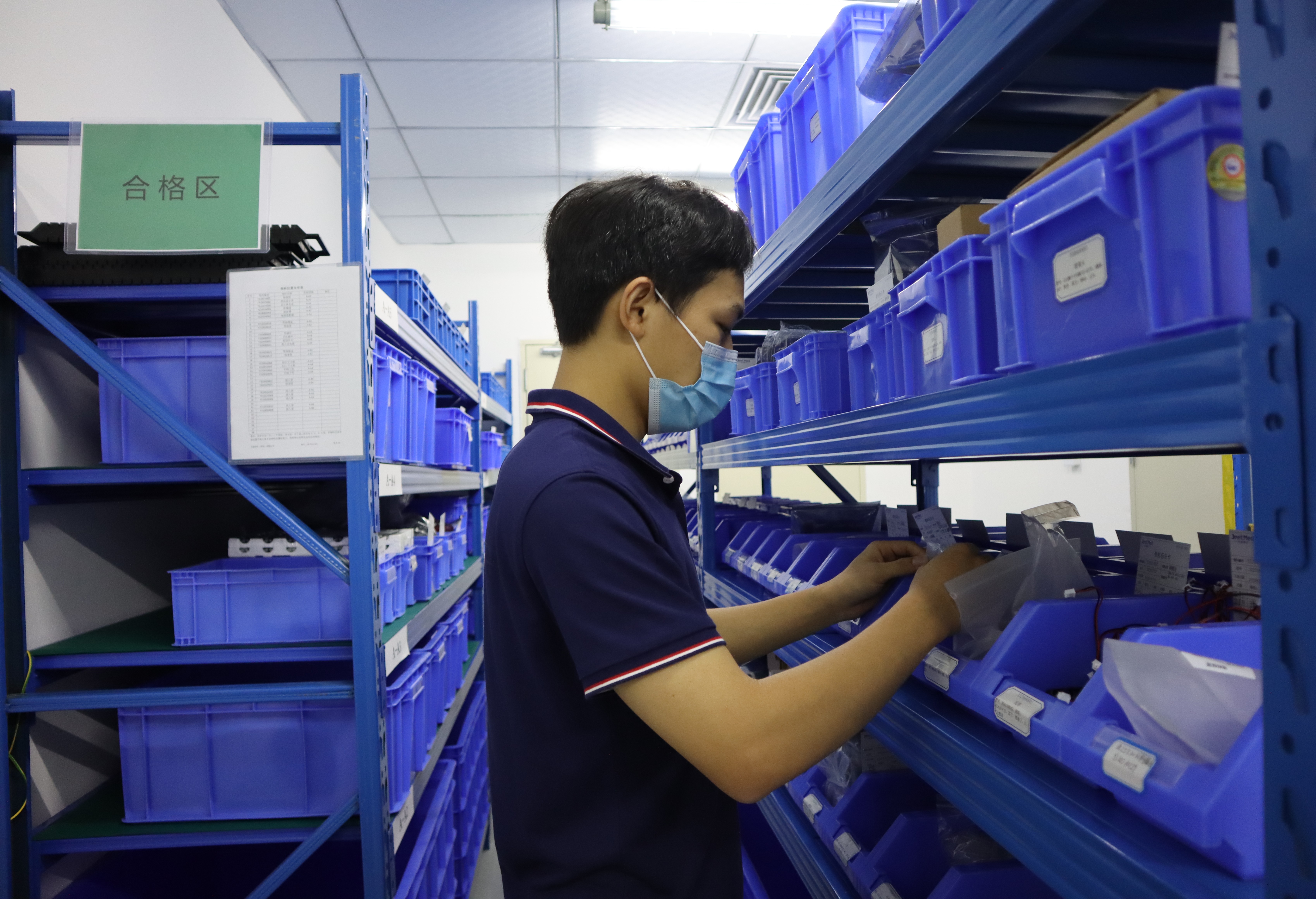
- Verify the evidence behind the numbers. Request the quality-system certificate and the manufacturing facts. Jeet Medical (Shenzhen) Co., Ltd., which manufactures the JeetVet range, works under an ISO 13485 quality system certified by SGS, from a 5,000 m² facility with 130 employees and an annual output of 10,000 units, including a 100,000-class cleanroom and a 10,000-class microbiological laboratory.
Model Comparison: Interpreting the Specifications Side by Side
| Model and type | Outer diameter | Working length | Working channel | Bending / rotation | Field angle / depth of field | Imaging |
|---|---|---|---|---|---|---|
| VET-5820 — portable veterinary gastroscope for large animals | 5.8 mm | 1500 mm | 2.0 mm | 180° bending, 360° rotation control | 120° / 7–100 mm | 1080P HD |
| VET-8528 — portable veterinary endoscope for large animals | 8.5 mm | 1500 mm | 2.8 mm | 180° bending, 360° rotation control | 120° / 7–100 mm | 1080P HD |
| RAE-107 — portable WiFi veterinary endoscope | 5.8 mm | 1000 mm | 2.0 mm | 360° directional control | — / 7–100 mm | HD, 1,000,000 pixels |
| RAE-105 — portable USB veterinary endoscope | 5.8 mm | — | 2.0 mm | 180° up & down, 180° left & right, 360° steering | 120° / 7–100 mm | 1,000,000 pixels |
| RAE-105Pro — portable WiFi veterinary endoscope | 5.8 mm | — | 2.0 mm | 180° up & down, 180° left & right, 360° steering | 120° / 7–100 mm | 1,000,000 pixels |
| RAE-109 — portable USB veterinary gastroscope | 5.8 mm | — | 2.0 mm | 180° up & down, 180° left & right, 360° steering | 120° / 7–100 mm | 1,000,000 pixels |
| Model and type | Tube / lens diameter | Working length | Working channel | Bending / steering | Field of view / focus | Imaging |
|---|---|---|---|---|---|---|
| RAE-201 — veterinary flexible otoscope (ear and nasal examination) | 3.1 mm | 600 mm | 1.2 mm | 180° bending, up & down steering | 120° / 5–50 mm | 160,000 pixels |
| RAE-500 — portable smart veterinary otoscope | 3.9 mm lens | — | — | — | 78° field of view / 5–50 mm focal length | 720 × 720, 1 megapixel, 6 LED lights, 1×–1.5× magnification |
A dash (—) means the value is not stated in the published parameters for that model. Where a figure is missing, it should be requested from the supplier rather than assumed from a similar model.
Reading the two tables together produces three conclusions that are easy to miss when parameters are reviewed one at a time.
First, VET-5820 and VET-8528 are close relatives with one meaningful difference. Bending angle, rotation control, working length, field angle, depth of field, and image resolution are identical. The difference is the tube: 5.8 mm outer diameter with a 2.0 mm channel versus 8.5 mm outer diameter with a 2.8 mm channel. The choice between them is therefore an instrument-passage and lumen-tolerance decision, not a performance-ranking decision.
Second, RAE-105 and RAE-105Pro are the same scope with different connectivity. Both list a 5.8 mm outer diameter, 1,000,000 pixels, 360° steering, 180° up & down and 180° left & right bending, a 120° field angle, a 2.0 mm channel, a 7–100 mm depth of field, and a weight under 1 kg. RAE-105 connects by USB; RAE-105Pro adds WiFi. Configuration, not optics, is the deciding variable.
Third, the otoscope-class devices are a separate optical design. The RAE-201 combines a 3.1 mm tube, a 600 mm working length, a 1.2 mm channel, and a 5–50 mm depth of field with a 120° field angle — scope-like geometry at a size suited to narrow passages. The RAE-500 abandons the long tube entirely in favour of a 3.9 mm lens, a 78° field of view, six LED lights, and digital magnification.
Use Cases: Matching Parameters to the Animal and the Setting
Small animal gastrointestinal examination (dogs and cats)
In small animal work the constraint is maneuverability rather than reach. A 5.8 mm tube with a 2.0 mm channel — RAE-105, RAE-105Pro, or RAE-109 — pairs 360° steering and 180° up & down plus 180° left & right bending with a 120° field angle and a 7–100 mm depth of field. That combination is built for surveying the upper gastrointestinal tract at close range and for keeping the mucosa inside the sharp zone while the tip is deflected. Where the examination has to move from inspection to sampling in a single pass, the RAE-107 adds a 1000 mm working length and documents water & air supply, suction, and a forceps working channel.
Large animal gastrointestinal examination
The distance from the mouth to the stomach is greater in large animals than in dogs and cats, which is why working length becomes the first filter. VET-5820 and VET-8528 both provide a 1500 mm working length, 1080P imaging, a 180° bending angle, 360° rotation control, a 120° field angle, and a 7–100 mm depth of field. The choice between them is the channel: a 2.0 mm channel inside a 5.8 mm tube, or a 2.8 mm channel inside an 8.5 mm tube. Select on the largest instrument you routinely need to pass and on the lumen the animal tolerates.
Ear and nasal examination
The RAE-201 veterinary flexible otoscope is specified for animal ear and nasal examination: a 3.1 mm outer diameter tube, a 600 mm working length, a 1.2 mm channel, a 180° bending angle with up & down steering, a 120° field angle, a 5–50 mm depth of field, and 160,000 pixels. Compare that with the RAE-500, which offers a 78° field of view, a 3.9 mm lens, 720 × 720-pixel image/video capture, six LED lights, and 1×, 1.2×, and 1.5× magnification with 8 GB of built-in storage. One device offers a wide-angle view plus a small working channel; the other offers magnified detail and no channel. That is a clinical decision, not a quality ranking.
Field and ambulatory practice
Portability changes which parameters matter. The RAE-105 family weighs under 1 kg, runs on Android, Windows, and iOS, and connects by USB or USB with WiFi. Documented case material for portable veterinary endoscopes highlights an ultra-portable all-in-one design for use between clinics and field sites, an ergonomic and light design to reduce operator fatigue, and operational simplicity with rapid maintenance. The same case material records 100% equipment uptime in resource-constrained areas through remote technical support and robust device design — a reminder that bending angle and field angle only deliver value if the device is available when the animal is on the table.
Distributor and multi-clinic purchasing
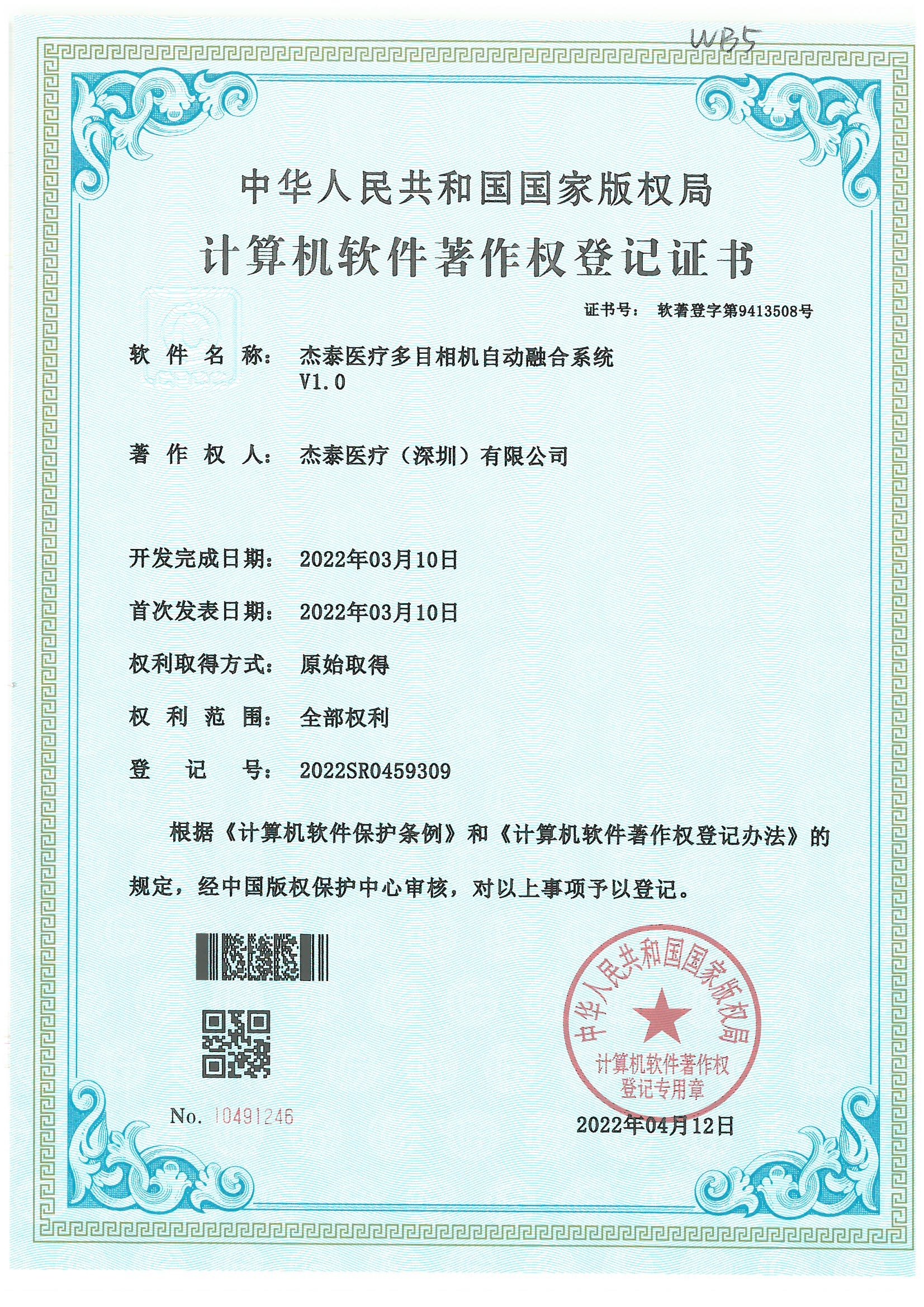
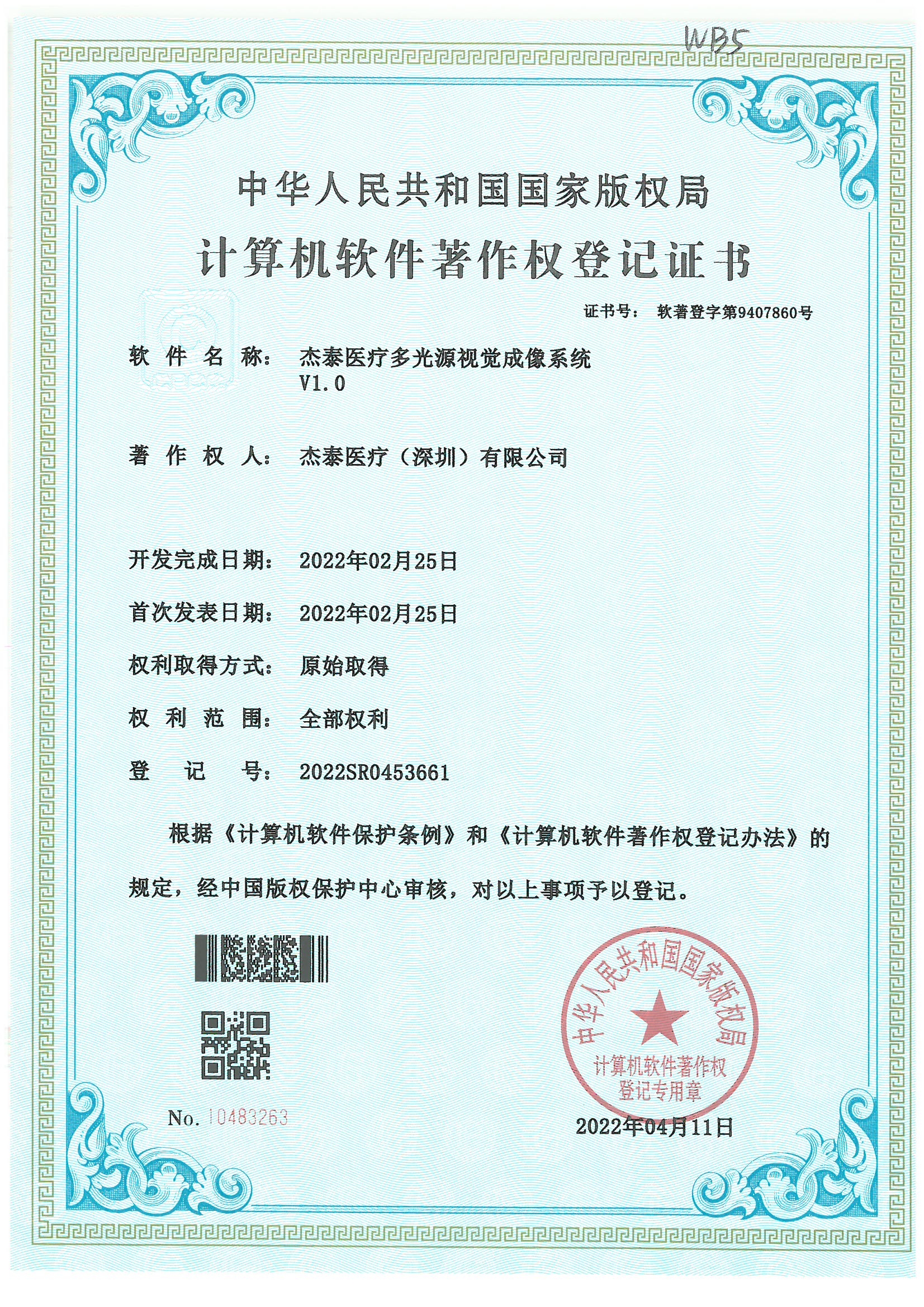
For distributors evaluating a range rather than a single unit, the parameter spread is the product: outer diameters from 3.1 mm to 8.5 mm, working channels from 1.2 mm to 2.8 mm, working lengths from 600 mm to 1500 mm, a 120° field angle across the gastrointestinal group, and a 78° field of view on the digital otoscope. Supporting documentation travels with the range — an ISO 13485 quality system certified by SGS, plus registered software copyrights for the Multi-Camera Automatic Fusion System V1.0 (certificate No. 9413508) and the Multi-Light Source Vision Imaging System V1.0 (certificate No. 9407860).

Frequently Asked Questions
Do veterinary endoscope specifications such as field of view have to comply with published standards?
Field of view is a defined optical property, and the ISO 8600 series applies to medical endoscopes for this reason: ISO 8600-1 covers general requirements and ISO 8600-3 addresses field of view. On the quality-system side, Jeet Medical (Shenzhen) Co., Ltd. is certified under ISO 13485 by SGS. Two software components used in the imaging chain are registered in the CN market: the Jeet Medical Multi-Camera Automatic Fusion System V1.0 (certificate No. 9413508, issued 2022-03-10, valid to 2072-02-10) and the Jeet Medical Multi-Light Source Vision Imaging System V1.0 (certificate No. 9407860, issued 2022-02-25, valid to 2072-02-25). Both certificates apply to the CN market only, so buyers in other regions should confirm local registration and import requirements with the supplier before ordering.
What bending angle and rotation control do I need to examine the stomach in different species?
Bending angle and rotation control should always be requested as a pair. The large animal gastrointestinal models VET-8528 and VET-5820 document a 180° bending angle with 360° rotation control over a 1500 mm working length. The portable 5.8 mm models RAE-105, RAE-105Pro, and RAE-109 document 360° steering with 180° up & down and 180° left & right bending. The RAE-201 otoscope documents 180° bending with up & down steering only, which suits the straighter ear and nasal passages. A 180° bend lets the tip turn back toward the shaft; rotation control lets that bend be directed without twisting the whole instrument from outside the animal.
How do I choose between a 1.2 mm, 2.0 mm, and 2.8 mm working channel?
Choose the channel from the instruments you actually intend to pass, then confirm the fit. In the current range, 1.2 mm appears on the RAE-201 flexible otoscope inside a 3.1 mm tube; 2.0 mm appears on RAE-105, RAE-105Pro, RAE-107, RAE-109, and VET-5820; and 2.8 mm appears on VET-8528 inside an 8.5 mm tube. Two rules follow. First, the outer diameter of each instrument must be smaller than the channel's inner diameter with clearance left for movement while the scope is bent. Second, a wider channel usually means a wider insertion tube, which affects which animals and passages the scope suits. The RAE-107 shows what a 2.0 mm channel enables when the ports are included: water & air supply, suction, a forceps working channel, and single-veterinarian operation.
Which veterinary endoscope configuration is the best fit, and what drives the cost?
There is no single best configuration, because the deciding variables are anatomical rather than promotional: the narrowest passage the tube must enter, the working length needed to reach the target, the largest instrument that must pass through the channel, and the working distance at which tissue must stay inside the depth of field. Cost follows the same variables — outer diameter, working length, channel diameter, imaging resolution, and connectivity. The RAE-105 and RAE-105Pro illustrate the point directly: identical optics and dimensions, with USB on one and USB plus WiFi on the other. For a small clinic, matching the parameters to the actual case mix is more economical than buying the widest specification available. Request a quotation that names the model, the connection type, and the accessories so the comparison stays specification-to-specification.
Can we validate a veterinary endoscope on a sample before placing an order?
Validation on a sample is the most reliable way to confirm specifications that no datasheet can settle on its own — whether your instruments move freely through the channel while the tip is bent, and whether tissue falls inside the stated depth of field at your normal working distance. A practical evaluation checks the bending and rotation range against your routine maneuvers, passes your standard instruments through the channel or channels, reviews image quality at the working distance you use most, and confirms that one veterinarian can operate the system alone if that is the intended workflow. To arrange a sample evaluation or request a specification-matched quotation, contact the JeetVet team at jeetvet66@gmail.com or by WhatsApp at +86 13816158380, and download the full product catalog from the JeetVet brochure.
Conclusion: The Specification Check That Prevents a Mismatch
Bending angle, working channel diameter, and field of view are not three separate claims to be compared row by row. They are one system. A 180° bending angle with 360° rotation control is what makes deep-tip navigation possible; a working channel of 1.2 mm, 2.0 mm, or 2.8 mm is what determines whether the examination can also treat, sample, or suction; and a 120° field angle is only as useful as the 7–100 mm depth of field that keeps tissue sharp, or the 78° field of view with 1×–1.5× magnification that resolves detail in a narrow ear canal.
The evaluation method that avoids mismatches is straightforward: write down the species range, the passage, the target structure, the instruments, and the working distance; then read the datasheet against that list, model by model, in the order set out above. Where a figure is not published (— in the comparison tables), ask for it rather than inferring it from a similar model. Where a figure is published, ask for the certificate and the manufacturing evidence behind it — which is where ISO 13485 certification by SGS, a 5,000 m² facility, an annual output of 10,000 units, and registered imaging software become part of the specification review rather than a footnote to it.
Next step: send your case mix and instrument list to the JeetVet team and request a specification-matched recommendation — model, channel diameter, working length, connection type, and accessories in one document.
Email: jeetvet66@gmail.com · Tel: +86 755-23251842 / +86 13381945549 · WhatsApp: +86 13816158380
Website: www.jeetvet.com · Catalog: download the JeetVet product brochure (PDF)
Jeet Medical (Shenzhen) Co., Ltd. · 9th Floor, Block B, Building 1, No. 76 Baohe Avenue, Longgang District, Shenzhen, China
Have Questions or Need More Details?
Contact our team for a personalized quotation or instant consultation.
Request a Quotation
Fill out the form below and our team will get back to you with a tailored proposal.
WhatsApp Direct Chat
Prefer to chat in real-time? Message us on WhatsApp for instant assistance & quick answers.
- Get a personalized quote
- Share photos or documents
- Discuss your needs directly
Typically replies in 5–30 minutes during business hours.