Decoding Veterinary Endoscope Parameters: How Manufacturing Quality Impacts Performance
Decoding Veterinary Endoscope Technical Parameters: How Manufacturing Quality Impacts Diagnostic Performance
For procurement professionals and veterinary clinic owners, selecting the right veterinary endoscope is about more than just a brand name. The technical parameters printed on a spec sheet—outer diameter, working channel, bending angle, pixel resolution—directly determine whether the device can perform a successful foreign body retrieval in a cat's trachea or a thorough gastroscopy in a large dog. But equally critical is the manufacturing process behind those numbers. This guide explains how to interpret key veterinary endoscope specifications and why production quality separates high-performance tools from unreliable alternatives.
What Is a Veterinary Endoscope and How Does It Work?
A veterinary endoscope is a flexible or rigid instrument equipped with a camera and light source, used to visualize internal body cavities in animals. The device consists of an insertion tube, a steering mechanism, an imaging sensor, and a display unit. Veterinarians use it for diagnosing conditions like inflammatory bowel disease, tracheal collapse, ear infections, and for performing minimally invasive procedures such as biopsy and foreign body removal.
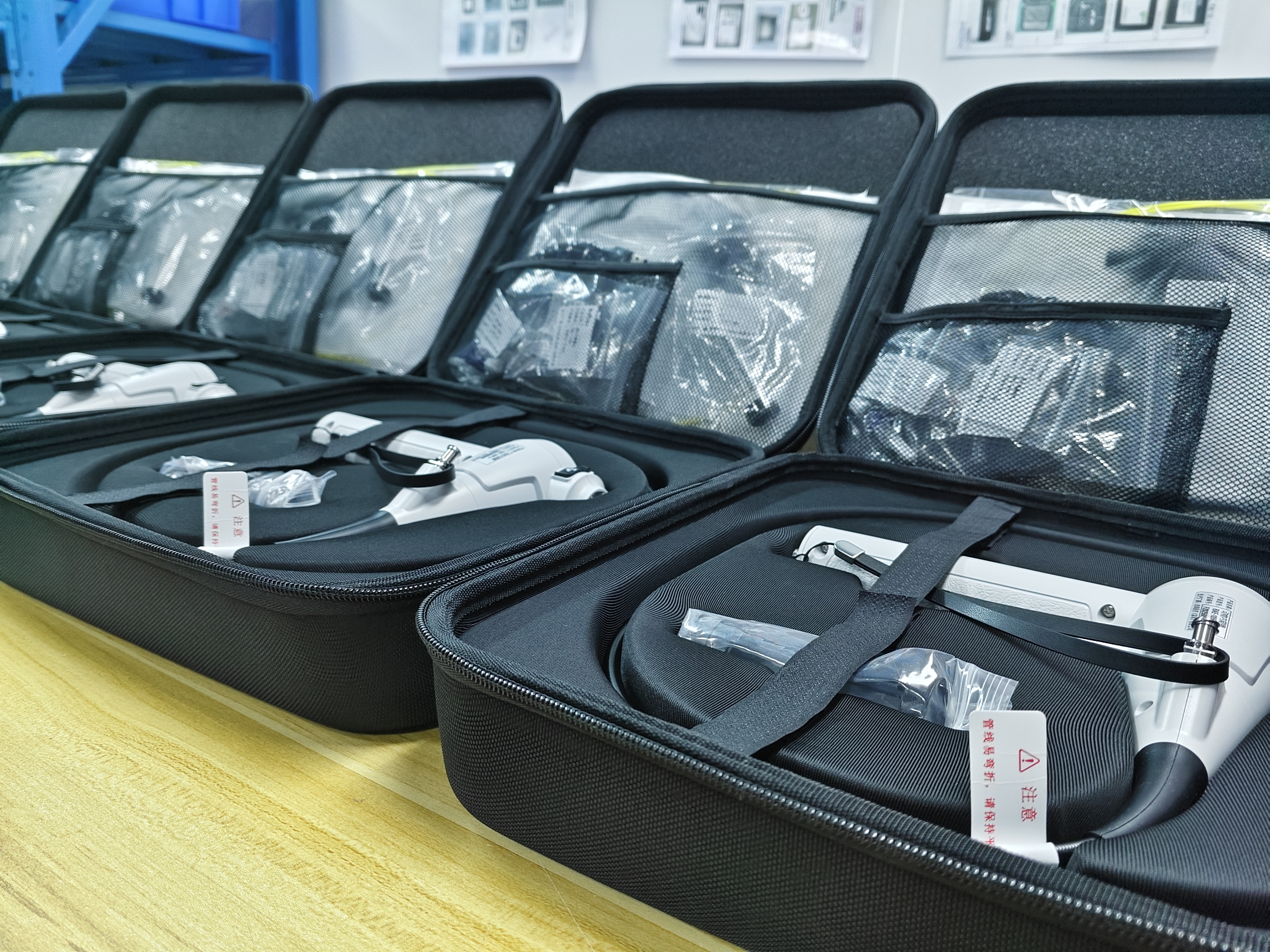
Modern portable veterinary endoscopes, such as those from JeetVet, offer high-definition imaging, 360° articulation, and compatibility with smartphones or tablets. They work by transmitting real-time video through a flexible cable or wireless connection, allowing a single veterinarian to operate the scope while viewing the image on a screen.
Why Technical Parameters Matter: The Link Between Specs and Clinical Outcomes
When a buyer sees “outer diameter 5.8 mm” or “working channel 2.0 mm,” they must understand how these numbers affect real-world use. A smaller outer diameter is essential for small animal and avian endoscopy, while a larger working channel allows passage of biopsy forceps or retrieval tools. The bending angle and rotation control determine maneuverability inside tortuous anatomy. High-definition resolution (e.g., 1080P or 1,000,000 pixels) is critical for identifying subtle lesions.
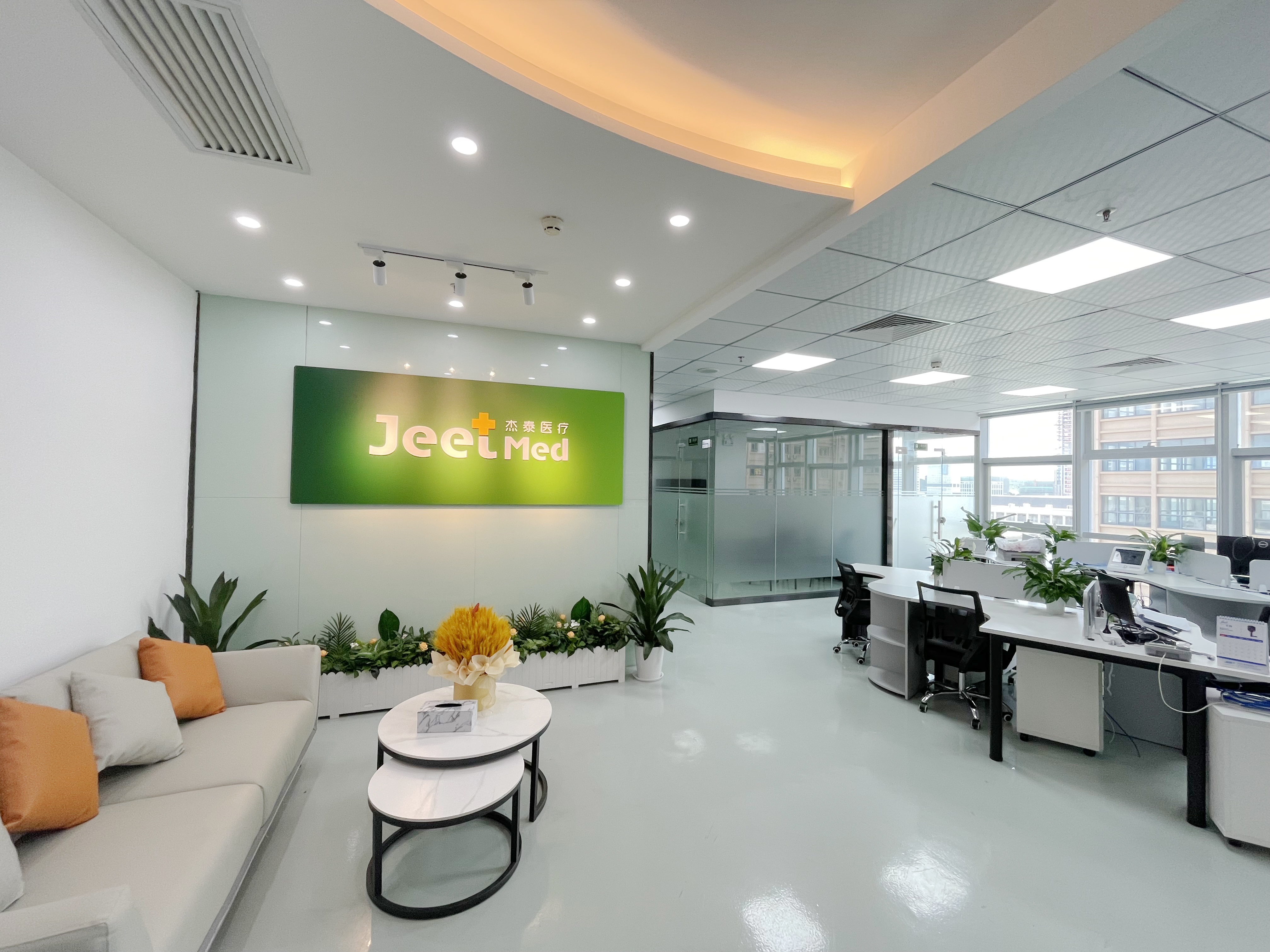
However, these parameters are only as reliable as the manufacturing process that produces them. A poorly manufactured endoscope may have an inconsistent bending angle, rough insertion tube surface, or imaging sensor that degrades over time. That is why choosing a reliable veterinary endoscope manufacturer like Jeet Medical—with ISO 13485 certification, a 100,000-class cleanroom, and a dedicated R&D team—ensures that the specs you see are the performance you get.
Key Veterinary Endoscope Parameters Decoded
Below is a breakdown of the most important specifications, using examples from JeetVet's product lineup.
| Parameter | What It Means | Why It Matters | Example (JeetVet Model) |
|---|---|---|---|
| Outer Diameter | Thickness of the insertion tube | Smaller diameter (e.g., 3.1 mm) is needed for ear/nasal exams in cats; larger (8.5 mm) for large animal gastroscopy | RAE-201: 3.1 mm; VET-8528: 8.5 mm |
| Working Channel Inner Diameter | Diameter of the internal channel for instruments | Determines which tools (forceps, baskets) can pass; larger channel (2.8 mm) allows bigger instruments | RAE-201: 1.2 mm; VET-8528: 2.8 mm |
| Working Length | Length of the flexible insertion tube | Longer length (1500 mm) reaches the stomach of large dogs and horses; shorter (600 mm) is for ears/nose | VET-5820: 1500 mm; RAE-201: 600 mm |
| Bending Angle | Maximum articulation of the tip | 180° up/down or 360° rotation enables navigation around tight corners; crucial for bronchoscopy | All JeetVet models: 180° bend + 360° rotation |
| Field Angle | Width of the visible area | 120° provides a wide view for orientation | RAE-105: 120° |
| Depth of Field | Range of sharp focus | 7–100 mm covers close-up to mid-range; essential for both ear canal and stomach lining | VET-8528: 7–100 mm |
| Image Resolution | Pixel count or HD standard | 1080P or 1,000,000 pixels gives clear detail for diagnosing small lesions | RAE-105Pro: 1,000,000 pixels; VET-8528: 1080P |
| Connectivity | How the endoscope connects to a display | USB/WiFi flexibility allows use with smartphones, tablets, or laptops; important for portability | RAE-105Pro: USB + WiFi; RAE-105: USB |
How Manufacturing Quality Affects These Parameters
Even the most impressive spec sheet can fail if manufacturing is inconsistent. Here are four critical processes that directly impact the real-world performance of a veterinary endoscope:
- Precision molding of the insertion tube: The outer diameter must be uniform along the entire length. Jeet Medical uses medical-grade polymers and stainless steel with tight tolerances to ensure smooth insertion and patient safety.
- Calibration of the steering mechanism: The joystick control relies on tension wires that must be calibrated within microns. Poor calibration leads to drift or failure. JeetVet's exclusive joystick system undergoes 100% pre-shipment testing to guarantee ≤1° deviation.
- Cleanroom assembly of the imaging sensor: Dust particles can ruin image quality. Jeet Medical operates a 100,000-class cleanroom and a 10,000-class microbiological laboratory to assemble camera modules free of contaminants.
- Sealing and waterproof integrity: Only the insertion tube is immersion-safe; the handle is not waterproof. JeetVet applies strict quality control to prevent liquid ingress, which is a leading cause of endoscope failure. The company provides clear handling guidelines and remote support to reduce user error.
Step-by-Step Guide to Evaluating Veterinary Endoscope Quality
- Verify the manufacturer's certifications: Look for ISO 13485 (quality management) and any software copyrights or patents. Jeet Medical holds software copyrights like the “Multi-Light Source Vision Imaging System V1.0” (Certificate #9407860).
- Examine the spec sheet in detail: Ensure every parameter has a clear value. Vague terms like “high resolution” without pixel count are a red flag.
- Ask about the production process: Does the factory have a cleanroom? What is the monthly capacity? Jeet Medical has a 5000m² facility, 30 R&D engineers, and an annual output of 10,000 units.
- Request a functional test: A reliable supplier will offer pre-shipment inspection. JeetVet performs 100% functional testing on every unit.
- Check after-sales support: Remote support, training, and spare parts availability are essential. Jeet Medical provides remote support and free training for all clients.
Use Cases: Real-World Impact of Parameter Selection
Two distributor case studies illustrate how the right endoscope—built with quality manufacturing—solves clinical challenges:

Russia Distributor (50 units): Specializing in gastrointestinal foreign body removal in large canine breeds, this distributor used JeetVet's RAE-105Pro and VET-5820 models. The 1500 mm working length and 2.0 mm working channel allowed retrieval of large objects. Result: over 300 veterinarians trained, and a 40% increase in successful non-surgical foreign body retrievals.
Ukraine Distributor (40 units): Focused on emergency trauma care and stray animal welfare, this distributor relied on the ultra-portable RAE-105 and RAE-500 for field work. The devices achieved 100% uptime in resource-constrained areas, supported by JeetVet's remote technical support and robust design.
Comparing Veterinary Endoscope Brands: JeetVet vs. Established Players
When choosing between brands, buyers should compare not only specifications but also total cost of ownership and ease of use. A benchmark comparison is shown below:
| Parameter | JeetVet (e.g., RAE-105Pro) | Karl Storz (comparable model) | Olympus (comparable model) |
|---|---|---|---|
| Total Cost of Ownership (3 years) | 25% lower vs. Karl Storz | Baseline | 20% higher than JeetVet |
| Boot-up Time | 5 seconds | ~15 seconds | ~10 seconds |
| Portability | <1 kg, all-in-one | Cart-based system | Separate processor unit |
| Single-Vet Operation | Yes (RAE-107/RAE-105Pro) | Usually two-persons | Usually two-persons |
| Maintenance Cost | Low-cost parts + free training | 20% higher maintenance | 20% higher maintenance |
Frequently Asked Questions (FAQ)
- What is a veterinary endoscope used for?
- A veterinary endoscope is used to examine internal organs like the gastrointestinal tract, respiratory system, ear canal, and nasal passages in animals. It enables minimally invasive diagnosis and treatment.
- How do I choose between a USB and WiFi endoscope?
- USB models (e.g., RAE-105) offer reliable wired connection; WiFi models (e.g., RAE-105Pro, RAE-107) provide wireless freedom for field use. Both are compatible with Android, Windows, and iOS.
- What does 180° bending and 360° rotation mean?
- These numbers indicate the tip can bend up/down 180° and rotate left/right 360°, giving full control to navigate complex anatomy like the tracheal bifurcation or stomach curvature.
- Why is working channel diameter important?
- A larger channel (e.g., 2.8 mm) allows passage of larger biopsy forceps or retrieval baskets; smaller channel (1.2 mm) is for ear/nasal procedures where space is limited.
- How can I verify manufacturing quality?
- Check for ISO 13485 certification, cleanroom ratings, and request a factory tour or video. Jeet Medical openly shares its 5000m² facility with 100,000-class cleanroom.
- What is the MOQ for JeetVet endoscopes?
- The minimum order quantity is 1 unit, and payment is T/T in advance. Delivery methods include FOB and CIF.
Conclusion
Understanding veterinary endoscope technical parameters and how they are influenced by manufacturing quality is the key to making a cost-effective, reliable purchase. Whether you need a portable veterinary endoscope for dogs and cats, a large animal gastroscope, or a digital veterinary otoscope, always evaluate both the spec sheet and the supplier's production capability. Jeet Medical (JeetVet) offers ISO 13485-certified, cleanroom-manufactured endoscopes with HD imaging, 360° articulation, and single-vet operation—backed by a 2-year distributor track record in Vietnam, Russia, Ukraine, and beyond.
For a comprehensive overview of all JeetVet products and specifications, download the official brochure or contact the team at troy@jeetmed.com / WhatsApp.
Have Questions or Need More Details?
Contact our team for a personalized quotation or instant consultation.
Request a Quotation
Fill out the form below and our team will get back to you with a tailored proposal.
WhatsApp Direct Chat
Prefer to chat in real-time? Message us on WhatsApp for instant assistance & quick answers.
- Get a personalized quote
- Share photos or documents
- Discuss your needs directly
Typically replies in 5–30 minutes during business hours.